Glenn Fleishman, who writes about technology for The Economist and other publications, emails:
I was quite glad to see your blog entry exposing the penny-pinching New York Times. I contributed several articles a year, from paragraphs to features, to Circuits and Business from 1998 to 2006 or 2007. I eventually stopped writing for the Tim.
One reason was money. When I started, I was paid 50 cents a word, which seemed ludicrous in 1998, but I was a younger writer, and knew newspapers were cheap. In 2000, I was writing a column every four weeks for Business 2.0 for about $2.50 a word under retainer...and the Times was still paying 50 cents a word. I believe the Times may have paid that rate since the 1970s, and simply found inflation-adjusting rates was unnecessary.
I often said, I subsidized by writing for the Times through other work, which seemed silly, but I wasn't writing enough for them to be a real drain.
What the Times was paying you for your columns shows me how really cheap the organization is.
From my understanding, the $1,000 column rate (or about $1 a word) is actually fairly high for the Times. It includes a premium for delivering a column on time every four weeks, regardless of what else might going on in the world or your life. But I will note that in the six years I was writing it, the Times never increased its rates.
I should also confess that as editor of Reason I hired writers at rock-bottom rates--they dreamed of 50 cents a word--and paid them very slowly. But Reason was an always-struggling, cause-oriented nonprofit that could barely pay its bills. Most of our freelancers had other employment and were not contributing to the magazine primarily for the money. Unfortunately, the Reason model appears to be the future of journalism.
Posted by Virginia Postrel on January 04, 2010 • Comments
Mary Tripsas is out and NYT flak catcher Clark Hoyt devotes his public editor column to the issue. He and I talked at length on the phone and exchanged a couple of emails. While he doesn't exactly get what I said wrong, I'm concerned that some subtleties got lost. In particular, I made a distinction between doing the job of a management professor and doing the job of a Times columnist and a distinction between giving a journalist a junket to influence coverage and paying writers (professors or journalists) to share their own ideas as speakers or consultants. Maybe I wasn't fully clear, but here's what I wrote to him. First, in response to his initial query.
Hi Clark, I did not turn down the column because of the rules. (Don't believe everything you read on Gawker.) As I said in my post, I never got that far. I turned down the column because it looked like a black hole of time and research expenses. I have a contract to write a book on glamour for The Free Press and wanted to focus any freelance writing on subjects related to my book. If I had entered into negotiations, however, the rules would have eventually led to my disqualification.
As you may know, I was an Economic Scene contributor for six years, before the new restrictions were in place. At that time, conflicts were considered on a column-by-column basis, and no significant issues arose. I wrote about academic economists, who weren't ever going to pay me for anything. (There were a couple of minor situations that Tom Redburn, my editor, and I hashed out. I don't remember the details, except that one involved my ownership of 100 shares of Amazon stock. I know that Hal Varian, who is a great economist and a great columnist, did run into a lot of conflicts with his consulting, but he just didn't write about those topics.)
For Economic Scene, I was paid $1,000 a column and was grudgingly granted airfare once a year to attend the American Economic Association's annual meetings; my hotel expenses were covered by my husband's academic department, since I shared his room. I was under the strong impression at the time that the NYT would not have sprung for the hotel room. Although we never got to discussing fees for Prototype, my assumption was that similar payments would apply, although the Prototype column would require much more time, both to develop new sources and report individual columns. To be done right, it would also need fairly in-depth, on-site reporting of the sort the Times is loath to fund for freelancers. Keep in mind also that the Times, unlike most publication, also demands all rights to stories rather than, say, first and nonexclusive rights.
Under the new rules, I don't see how I could write anything other than an op-ed or occasional book review for the Times, and I may be skirting the rules on that.
I'll give you a call tomorrow to discuss this further. Best wishes, Virginia
After we talked, Clark was kind enough to send me a copy of his draft for fact-checking. It included the following paragraph about me.
Virginia Postrel, a writer and former Times columnist who was recruited for the "Prototype" column before Tripsas got it, thinks the paper's rules are unfair to writers and are themselves "borderline unethical." The paper wants to treat freelancers like staffers without paying them or giving them the benefits of staffers, she said. It expects in the case of a Tripsas that Harvard will pay expenses the paper should pay. She said The Times is operating under "the false assumption" that companies like 3M are flying out a professor to influence her when they are instead trying to learn from her, as much as she is trying to learn from them.
I probably should have left well enough alone, but I sent the following email:
Hi Clark, Thanks for sending the piece. I understand the space constraints, but you've actually conflated two issues: why companies that hire potential Times writers (like Tripsas or, for that matter, me) to speak or consult because they learn from them, and why 3M offered Tripsas and other professors a plant tour. (I'm sure 3M wanted to continue to build its reputation as an innovation leader among Harvard profs.) The revisions below, while not as graceful as your original graf, more accurately reflect my points.
Virginia Postrel, a writer and former Times columnist who was recruited for the "Prototype" column before Tripsas got it, thinks the paper's rules are themselves "borderline unethical." The paper wants to treat freelancers like staffers without paying them or giving them the benefits of staffers OR FUNDING THE RESEARCH EXPENSES THROUGH WHICH THEY BUILD EXPERTISE, she said. It expects in the case of a Tripsas that Harvard will pay REPORTING expenses the paper should pay. She said The Times is operating under "the false assumption" that companies PAY SPEAKING OR CONSULTING FEES TO PROFESSORS OR AUTHORS IN ORDER TO INFLUENCE THEIR FUTURE WRITING, rather than to learn from them. IN THE CASE OF TRIPSAS'S 3M TOUR, SHE SAID, A BUSINESS SCHOOL PROFESSOR'S JOB IS TO UNDERSTAND AND IMPROVE BUSINESS PRACTICES, SO FOR THAT PURPOSE, AS OPPOSED TO COLUMN RESEARCH, WHO COVERS THE EXPENSES IS IMMATERIAL.
I strongly believe that the Times is using its market power to freeload on the human capital--including both personal reputations and the expensive process of learning things--of its freelancers, which is one reason it is so happy to have so many professors on board, (something that will end if you seriously start enforcing the prohibition against earning any money from anybody who might conceivably be a source for any theoretical future article). But, hey, you can always dig up some more 24 year olds.
I 100% guarantee you that the blogs will be buzzing with the words "David Pogue" after this column runs. Since he has a bigger brand than the Times in his field--and thus more to lose if he loses readers' trust--I think the Times is perfectly justified in ignoring its policies for him. But a lot of people don't.
Best regards, Virginia
I had hoped that in response to this controversy the Times might adopt a more reasonable policy. But, at least for now, it appears that the paper is going to continue to drive away talent while substituting increasingly complex and intrusive rules for disclosure and editorial judgment.
Posted by Virginia Postrel on January 02, 2010 • Comments
Here are a few real ethical dilemmas faced by yours truly:
1) Do I dare write about the NYT's dumb ethics policy? What if I piss off the Times? Oh yeah, I can't write for them anyway, so I guess that's not much of dilemma. (But that calculation does explain why a lot of other people aren't piping up.)
2) I discover that Professor Postrel knows and likes Mary Tripsas. Should I not write about her problems, for fear of hurting their relationship? Should I not say her article wasn't very good?
3) Forbes.com asks me to write something on the occasion of Ralph Lauren's 70th birthday. I admire Ralph Lauren's use of glamour, but the company is in the news for a Photoshop disaster (not glamorous) and Ralph Lauren's most recent, Depression-inspired, collection borders on parody (silver lamé overalls!). For my glamour book, I'm going to want to use one or more photos from Ralph Lauren's ads. Do I write the column, include the recent missteps, and risk not getting permission to use such photos? (I did.)
4) I'm writing a DeepGlamour blog post about disappointing gifts. Do I include examples from my personal experience, at the risk of hurting the gift-giver's feelings? (I didn't.)
Note that none of these dilemmas have anything to do with who pays for what. They're all about relationships.
Posted by Virginia Postrel on December 30, 2009 • Comments
The latest "ethics" scandal buzzing through the journalism blogs provides another reminder that the culture and norms of the traditional journalism guild are ill-suited to the new "FREE" era. But first, a bit of personal context.
Back in June, I got an email from Tim O'Brien, the editor of the NYT's Sunday business section, asking if I'd be interested in writing a monthly column called PROTOTYPE about "creativity and innovation in the business world." I appreciated the invitation and was tempted by the subject matter. But, after a quick calculation, I demurred.
"The subject is certainly an interesting one to me," I replied, a bit snarkily, "but unless the Times has significantly increased its freelance payments and decided that research budgets aren't a waste of money, it's probably not worth the time away from my book writing."
Given my immediate no, our discussions never got far enough to hit the deal-killer: I am, in fact, ethically ineligible to write about innovation for the NYT.
I occasionally do paid speaking for companies that might conceivably be sources for a column on innovation. (Those speaking engagements generally pay quite a bit better than writing for the Times.) As an old journalism pro, I naturally know enough not to take a speaking gig and then turn it into an article, at least not without getting my editor's OK and disclosing any potential conflict to readers. But that's no longer enough for the Times. Its ethics guidelines now prohibit freelancers from taking honoraria or even travel expenses from anyone who might, in some theoretical future state of the world, be a source. In October, "Critical Shopper" columnist Mike Albo, a freelancer, was canned for taking a travel junket that had nothing to do with his NYT gig.
This overly broad policy presents the Times with a major problem that is only going to get worse. The paper wants writers who take no money, including expense reimbursement, from anyone who might conceivably be a "current or potential news source," even on beats unrelated to their NYT writing. The traditional way to achieve this goal was to pay staffers full-time salaries and cover their expenses. But the Times is no longer willing to foot that bill. To save money, it wants to use freelancers with independent expertise, gained through research the Times didn't fund. Yet for well-understood reasons of supply and demand, writers who have independent expertise nowadays rely on in-person engagements (speaking and perhaps consulting) for most of their income. Any freelancer you'd be eager to read on innovation--Michael Schrage, say--is almost certainly someone who also gets paid to share that expertise in person.
To fill the PROTOTYPE slot, the Times turned, as it does increasingly for business and economics coverage, to someone who wouldn't care about its low article fees or nonexistent reporting expenses: a tenured professor with an academic research budget, in this case, Mary Tripsas of the Harvard Business School. She is an expert on innovation, but a journalistic innocent. And now she's in trouble.
Along with some other academics, she visited 3M's innovation center, with the company covering her travel expenses. On Sunday, she published a column about such centers, with 3M's featured in the lead and spotlighted in photos. Charges of ethics violations were soon flying. If Mike Albo lost his slot, media bloggers argue, she should lose hers.
I don't believe Professor Tripsas did anything remotely corrupt. The main value 3M gave her was, in fact, the same thing journalists are bought off with every day: access. The travel expenses were incidental and surely would have been covered by Harvard had 3M not picked up the tab. But she did violate the Times's extraordinarily strict guidelines--guidelines so broad that she arguably shouldn't even have quoted the work of a colleague at Harvard Business School, since she relies on that organization for her salary and benefits.
The real problem was not that 3M covered some of Tripsas's reporting expenses. It's that the column wasn't very good. It lacked context about 3M's long history of internally driven innovation, the work of design consultancies like IDEO, or academic research on customer-driven innovation. It was old news. I wrote about a similar innovation center, at GE Plastics, in The Substance of Style, published in 2003 and researched several years earlier. (Tripsas's column in fact acknowledged that 3M opened its first innovation center more than a decade ago.) And the writing was noticeably cliched and strained: "In a world of online user communities, social media, interactive blogs and other technological means for companies to elicit customer feedback, you might think that face-to-face interaction is a thing of the past. Think again."
Instead of focusing on inputs, the Times should focus its quality control on outputs: what actually appears in the paper. Drop the absurd ethics guidelines, hire freelancers who know their subjects and how to write about them, and disclose any potential conflicts so readers can make up their own minds. Think about delivering value to the reader rather than ritualistically adhering to journalistic guild customs. Alternatively, the Times could shrink the paper to include only that reporting whose costs it can cover out of its own budget and stop trying to free ride.
CORRECTION: I sloppily jumped to a mistaken conclusion about Mary Tripsas's tenure status without actually checking. SMU's David Croson (a mutual friend), emails, "Mary Tripsas doesn't have tenure yet. (Harvard doesn't tenure its associate professors -- one of a very few places that doesn't.) She does, however, have an extremely generous research budget, so your points (about the Times' free-riding, and about HBS being willing to pay if 3M hadn't) seem essentially correct."
ADDENDUM: For those interested in the institutional context, this article (minus a couple of pages) by the eminent HBS accounting professor Robert Kaplan gives a picture of the ideal relationship among research, teaching, consulting, and case writing at Harvard Business School.
Posted by Virginia Postrel on December 28, 2009 • Comments
An article in Sunday's NYT travel section carries the season-appropriate headline, "Brad Pitt's Gifts to New Orleans." The piece suggests, rather gently, that the actor has made a common mistake: giving what pleases him rather than what the recipient wants. The displaced residents of the Ninth Ward would like comfortable, inexpensive, and quickly available houses. Pitt prefers cutting-edge architecture. Residents are grateful for his generosity and good wishes, but their gratitude is tinged with regret for what might have been if he'd heeded their desires.
Gifts are like that. Even the most generous can disappoint. As Cheryl Strayed writes in a terrific essay in the December issue of Allure (alas, in typical Conde-Nast fashion, it's not online):
"My boyfriend gave me a 12-pack of Diet Coke for Christmas!" I occasionally exclaim with glee, now that years have passed since the roil of sorrow and humiliation of that day. That present is little more than a funny memory now, a mere entry in my annals of the Really Bad Gifts I've Received. There was the "electronic guard dog" — a plastic speaker that emitted a screeching bark each time it detected motion — given to me when I had two actual dogs that did the job with authentic verve. There was the book about how to succeed as a financial executive in Japan that I received upon my college graduation as an English major. There were the used bath towels sent as a wedding present by an otherwise sane relative. And then there was the granddaddy of them all: a Weight Watchers gift certificate from my mother-in-law for my birthday when I was eight months pregnant.
Each of these gifts made me believe, in a new light, the old adage that it's far better to give than it is to receive. Receiving sometimes hurts. Bad gifts tell us not who we are, but who the gift givers wish we would be — thinner, say, or a Japanese capitalist rather than an aspiring writer. Or, perhaps worse, they imply that we mean so little to the gift giver that he or she didn't even bother to consider what we might like or need. That's how it felt to receive soda for Christmas.
To be fair, Strayed's mother-in-law very likely chose her gift out of womanly sympathy for the impending struggle to lose pregnancy weight, perhaps even thinking that she herself would have once appreciated such a present. But whatever the good intentions, the gift itself revealed that she knew little of her daughter-in-law's own desires or how Strayed wished to be thought of by others. The gift certificate wasn't just wasteful, like the electronic guard dog. It actually hurt.
The problem of buying good presents for other people, even people you supposedly know well, illustrates that old familiar Hayekian concept, the knowledge problem. If you can't even give your loved ones the right presents, how likely is it that a central authority could make the right decisions for everyone?
Posted by Virginia Postrel on November 30, 2009 • Comments
The Institute for Justice has filed suit to overturn the federal prohibition on financially compensating bone-marrow donors. Megan McArdle has a good post on the subject.
I do take issue with the idea that bone marrow should be exempt from the federal prohibition because, like blood or sperm (but not eggs), it regenerates. The same is functionally true of kidneys, where the remaining organ grows to take up the slack; liver lobes also regenerate.
Posted by Virginia Postrel on October 28, 2009 • Comments


 and the deadweight loss of Christmas,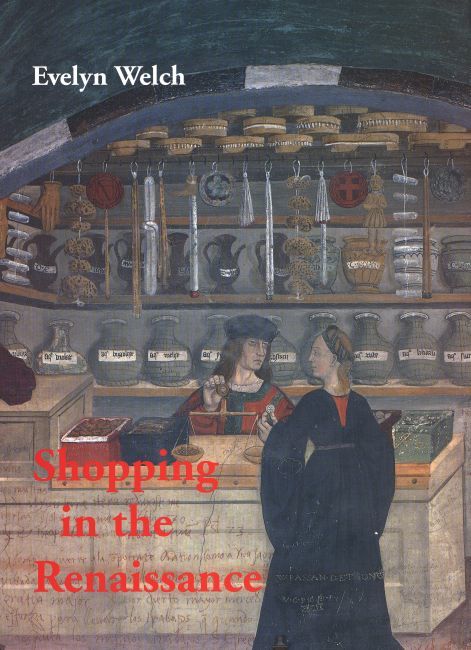

 by Evelyn Welch (read a