There's a video of my College of Charleston talk on glamour and politics here. (It does not, however, work with Chrome.)
Below, I am on The Agenda with Steve Paikin (described by the booker as "The Charlie Rose Show of Canada," but with a much less self-involved host), doing my best imitation of a mellow Canadian in a defense of the blessings of modern life. The discussion is inspired by Andrew Potter's The Authenticity Hoax: How We Get Lost Finding Ourselves.
---advertisement---
Posted by Virginia Postrel on December 15, 2010 • Comments
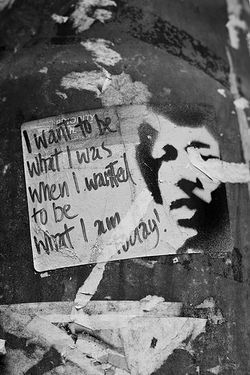
Adam Smith thought so. In a famous passage in The Theory of Moral Sentiments he described a "poor man's son, whom heaven in its anger has visited with ambition." The young man imagines how much easier his life would be if he could live in a grand home, attended by servants and traveling by coach rather than on foot: "He thinks if he had attained all these, he would sit still contentedly, and be quiet, enjoying himself in the thought of the happiness and tranquillity of his situation."
The man spends his life striving to achieve his dream. He becomes wealthy, with all the luxuries he imagined, but to get there he has to work so hard that he can never relax.
"Through the whole of his life," writes Smith, "he pursues the idea of a certain artificial and elegant repose which he may never arrive at, for which he sacrifices a real tranquillity that is at all times in his power." The man is deluded by the glamour of wealth, tricked by an illusion. Yet his achievement is not only real but socially beneficial: "It is this deception which rouses and keeps in continual motion the industry of mankind."
If people won't wear bicycle helmets because they think they look dorky, the typical Anglo-American response is to mandate helmet wearing, even if that means discouraging cycling. In bicycle-loving Northern Europe, however, private carrots are more popular than government sticks. In this post from DeepGlamour.net, I report on a couple of Scandinavian startups that take both safety and consumer tastes seriously.
A couple of weeks ago, I published a WSJ column citing research showing that while bicycle-helmet laws do save lives they also significantly discourage kids (especially teenagers) from riding bikes in the first place. The comments were lively and interesting — as I note in the article, this is a topic that excites all-or-nothing passions — with some people adamantly arguing that appearance is, or ought to be, completely irrelevant: "Riding a bike is not a fashion statement," declared one.
Wearing Yakkay helmets
Except, of course, that for many people it is. As both the WSJ and NYT have reported, bikes are gaining popularity among fashionable urban women. "The idea now is to look like a pedestrian on wheels," a bike retailer told the NYT's Ruth La Ferla. Preferably one liked to be featured on The Sartorialist. The "lovely bicycle" is in, and it doesn't go with the typical bike helmet.
Fortunately, in bike-loving Scandinavia enthusiasts for both bicycles and head-protection have turned not to laws but to design. In my article, I briefly mention Yakkay, a Danish startup that offers stylish helmets with changeable covers. "If you make a stylish bicycle helmet you don't need legislation," says CEO Michael Eide, "and in YAKKAY we wanted to make a helmet people actually want to wear." Now sold in Europe and Canada, Yakkay helmets will be available in the U.S. beginning next spring.
The Hövding: Protection without hat hair (click photo for larger image)
Taking a more radical approach is the Hövding (Chieftain), developed by Swedish designers Anna Haupt and Terese Alstin. An airbag disguised as a collar, it is, as Ariel Schwartz reports on Fast Company.com, "the complete antithesis of the hard-shelled helmets that cyclists have become used to." Six years in development, it will be available next year. Here's a video of how it works:
Photos courtesy of Yakkay and Hövding.
Posted by Virginia Postrel on October 24, 2010 • Comments
Faithful Dynamist readers may recall my late-2008 post, Depression Lust, and Depression Porn. In my latest WSJ column, I look at the topic from a different angle: how our abundance of stuff makes this very serious downturn easier to bear (one reason journalists can afford to indulge in Depression porn). Here's the opening:
Americans have a lot of stuff—so much, in fact, that getting it under control has become a major cultural fantasy. Witness the Container Store, whose aisles of closet systems and colorful boxes peddle dreams as seductive as any fashion shoot. Or consider shows like "Clean House," on the Style Network, where hosts cajole, browbeat and bribe homeowners into getting rid of half their things and organizing the rest.
Over the past few decades, as businesses have learned to streamline their inventories, American households have done just the opposite, accumulating ever more linens and kitchen gadgets, toys and TV sets, sporting goods and crafts supplies. "Because of all the shopping we've done, many of us now own lots of great stuff we never use anymore. And for some reason, we don't sell or give it away," says GiveYourStuffAway.com, promoting an annual day for leaving unwanted items on the curb for neighbors to cart away.
In today's sour economy, however, what once seemed like waste is starting to look like wealth: assets to draw on when times get tough (and not just because of all those ads promising top dollar for your gold jewelry). Material abundance, it turns out, produces economic resilience. Even if today's recession approached Great Depression levels of unemployment, the hardship wouldn't be as severe, because today's consumers aren't living as close to the edge.
Thoughtful, original, nuanced, curious, and empirical (and also often funny), Jonathan Rauch exemplifies what intellectual journalists are supposed to be. So it's no surprise that while the keepers of conventional wisdom at the NYT and New Yorker desperately try to identify the secret bosses of the Tea Party movement, Jonathan has been trying to understand what's really going on. For the short version, you can watch the video, but it's better to read his article on how the radically decentralized movement actually works. Here's the opening:
Though headless, the tea party movement is not mindless. Its collective brain meets every Monday night.
More than 200 leaders of local tea parties -- coordinators, as they usually call themselves -- join a conference call every week organized by an umbrella group called the Tea Party Patriots, the largest national tea party organization. On one Monday recently, three national coordinators begin the session with a rundown on plans for upcoming rallies. The events are expensive; does anyone have a problem with a search for $1,000 donors? (No one does.) An organizer has put together a manual on what to ask candidates at town hall events. ("That will go to the entire e-mail list.")
The group is polled on whether to hold a second round of house parties throughout the country. (Yes.) A coordinator gives an update on an iPhone app for tea partiers who will be going door to door this fall to talk to voters. (It will use Global Positioning System technology to download walking lists and upload voter data in real time -- cutting-edge stuff.)
The floor is then opened. Local leaders propose ideas, announce new tea party groups, float queries, and offer tips. (How can we maximize free publicity? Lawn signs, movie events, and digiprint postcards are cheap and effective.) A newcomer introduces a start-up tea party in Winfield, Ind. A coordinator in nearby South Bend offers a welcome. ("I know all these folks. I want to get you connected with them.")
Rick, from Albuquerque, N.M., asks if the national agenda includes investigating voter-roll irregularities, something his group is concerned about. Mark Meckler, a Tea Party Patriots coordinator and co-founder, weighs in. Newcomers "often don't understand how badly we need you to lead the way," he says. "If this is an area of concern to you," he admonishes, "the way the Tea Party Patriots works is that you guys really lead the organization. We're a relatively small group of people who are just trying to help coordinate. We're not in charge; we're not telling anybody what to do. You need to take a leadership role and stand up." Meckler suggests that Rick gather a group of people concerned about the issue and go to work.
Rick gets the message. "We'll get on the Ning [social-networking] site and try to take the lead on that."
Will vote fraud emerge as a tea party cause? Maybe, maybe not. Meckler, the closest thing the movement has to an organizational visionary, meant what he said. No one gives orders: In the expansive dominion of the Tea Party Patriots, which extends to thousands of local groups and literally countless activists, people just do stuff, talk to each other, imitate success, and move the movement.
While I'm catching up on the Dynamist blogging, I should call attention to another article I wrote for the WSJ, during New York Fashion Week. Here's the opening:
In March 2009, a few days before a major exhibit of Andy Warhol portraits opened at the Grand Palais in Paris, the curator faced a minor crisis. Pierre Bergé, the partner of Yves Saint Laurent and keeper of his legacy, objected to having the late fashion designer's portraits grouped with the likes of Giorgio Armani and Sonia Rykiel under the heading "Glamour." Saint Laurent was an artist, Bergé said. His image should hang with those of David Hockney and Man Ray. After all, Mr. Bergé said, Warhol himself had proclaimed YSL "le plus grand artiste français de notre temps."
The show went on, to glowing reviews, without the Saint Laurent images. It was an irony-drenched and very French moment, all about maintaining the status distinctions that Warhol himself had exploded. This was, after all, the man who famously compared department stores to museums. "Why do people think artists are special?" Warhol once said. "It's just another job."
Absurd though it was, Mr. Bergé's protest expressed a widespread conviction: that fashion is an inferior, unworthy, trivial and culturally suspect pursuit. Art is much, much better. In museum circles, observes Valerie Steele, the director of the Museum at the Fashion Institute of Technology, "Fashion is really seen as the bastard child of capitalism and female vanity."
So Sept. 9, when Mercedes-Benz Fashion Week opened at Lincoln Center, marked a significant cultural moment. The performing arts complex is doing more than providing a venue for runway shows. (You can, after all, rent its facilities for a bar mitzvah or corporate conference.) The center has hired a director of fashion and will incorporate fashion, along with opera, theater, dance and music, into its year-round lineup of featured arts, with plans for fashion films, photo exhibits and lectures.
It's a high-profile indicator of an intellectual trend that has been building for decades. Fashion is shedding its cultural stigma. It is increasingly recognized as a significant cultural activity—indeed, one of the defining characteristics of our civilization.
"Fashion attests to the human capacity to change," writes the French philosopher Gilles Lipovetsky in "The Empire of Fashion: Dressing Modern Democracy," his iconoclastic 1987 book. Like science and industry, "fashion is one of the faces of modern artifice, of the effort of human beings to make themselves masters of the conditions of their own existence."
In response to my WSJ column, Jim Prevor, the founder and editor-in-chief of Produce Business magazine, the online Jim Prevor's Perishable Pundit, and all-round perishable-food-business guru, emails:
[Y]our off-hand comment at the end that the local-food movement would be dangerous if it were somehow enacted into law is not such a distant hypothetical as that remark implied.
For example, at public universities all across the country there are increasing restrictions on food procurement. Although these policies are not "laws" they allow ideologues to impose real costs on the students, on their parents and on the public--without anyone voting for these policies. Recently we've run a series on food procurement at UC Davis:
The national school lunch program and related programs use the power of the purse — potential loss of federal funds — to get schools to adopt an anti-trade procurement policy. Some of this is explicit, the law contains a "buy-American" provision. There are exemptions, so a school can buy Chilean grapes when no US grapes are available, but competition is forbidden. The buy-local issue is more complex. The law is actually contradictory with some provisions requiring schools to seek out the low-bidder and other provisions urging them to buy local. The Obama administration has leaned toward the second provision in its discussions with state officials and school districts. We ran a related piece here: 'Buy American' and 'Buy Local' Requirements Confusing School Foodservice Buyers...Chilean Fresh Fruit Association Speaks Out
There are also special nutritional funds that are available only if you buy in politically approved places, such as a Farmer's Market. Here is a link to a government description ofa special program that adds on WIC funds — but only for purchases from Farmer's Markets with the explicit goal of encouraging the purchase of local produce: WIC Farmers' Market Nutrition Program
Beyond these public policy issues, we run a series of focus groups and mall intercepts and other studies that interact with consumers from the UK to North America and on to Australia/New Zealand. You would be shocked at what people expect. A seemingly intelligent woman walked out of a farm stand in Massachusetts. The stand stood on a small farm but probably 90% of the sales of the farm stand were purchased off the local wholesale market. Yet when we asked shoppers why they liked shopping there, more than one pulled out their pineapple and pointed to the advantages of a good Massachusetts grown pineapple!
Economist Luke Froeb comments further on the costs of localism, with video from Stewart Brand at TED. I will note, however, that consumer preferences need not be "rational." It's well and good to argue about the environmental impact of locally grown food with people who buy it because they think it's good for the planet. But we should avoid the technocratic temptation to subject individual subjective tastes to centralized cost-benefit analysis.
Posted by Virginia Postrel on September 25, 2010 • Comments
In a column in Saturday's WSJ, I defend Michael Pollan's expensive taste in peaches but question the locavore ideal. Here's the lead:
Michael Pollan, the best-selling author of "The Omnivore's Dilemma" and a leading advocate of buying locally grown food, recently upset many of his fans by daring to put numbers on his oft-repeated prescription to "pay more, eat less." Eight dollars for a dozen eggs? $3.90 for a pound of peaches?
Those figures were way too specific and way, way too high to go unnoticed. The humanistic foe of industrialized eating suddenly sounded like a privileged elitist, and the local-food cause seemed insensitive to cash-strapped shoppers.
But Mr. Pollan was only being honest. Patronizing local farmers who produce in small batches tends to cost more. You may find some peak-season bargains at the farmers' market, but there's no such thing as a free locavore lunch. Getting fruits and vegetables only from local farms necessarily limits variety — few crops are available everywhere all the time — and it doesn't come cheap. Economies of scale apply even to produce.
Read the rest, and some interesting comments, here. My column will run every other week in the Journal's new Saturday "Review" section. For a bit more commentary on exotic fruits, see this post on my DeepGlamour blog.
Posted by Virginia Postrel on September 25, 2010 • Comments







 ," his iconoclastic 1987 book. Like science and industry, "fashion is one of the faces of modern artifice, of the effort of human beings to make themselves masters of the conditions of their own existence."
 , which I mention in the article. In 2007, I wrote
  , the best-selling author of "The Omnivore's Dilemma" and a leading advocate of buying locally grown food, recently upset many of his fans by daring to put numbers on his oft-repeated prescription to "pay more, eat less." Eight dollars for a dozen eggs? $3.90 for a pound of peaches?