This post went out to subscribers to my Substack newsletter on January 7, 2026. Check out all the posts, including ones from the archives not reposted here, and subscribe here.
The first print edition of Works in Progress is out, with my inaugural history column. Here’s the opening:
In 1588, Galileo had not yet looked through a telescope. Microscopes, pendulum clocks, barometers, and steam pumps were decades away. Francis Bacon, a member of parliament still in his twenties, was only beginning his writing on science. Robert Boyle wouldn’t be born for another 39 years, Isaac Newton for another 55.
But a subtle shift in perspective was already taking place, heralding the ‘culture of growth’ that would blossom in the coming century. In intellectual circles, Europeans had begun to view their era not as a pale imitation of classical greatness but as a promising new world, blessed with discoveries and inventions the ancients never imagined. For all their brilliance, after all, Aristotle and Cicero knew nothing of the Americas – continents with as many and varied peoples, landscapes, flora, and fauna as Europe, Asia, or Africa. Nor did they enjoy the navigational tools that had made such discoveries possible.
In the late 1500s, in other words, Europeans started to imagine progress. ‘The first history to be written in terms of progress is [Giorgio] Vasari’s history of Renaissance art, The Lives of the Artists (1550)’, observes historian of science David Wootton. ‘It was quickly followed by Francesco Barozzi’s 1560 translation of Proclus’s commentary on the first book of Euclid, which presented the history of mathematics in terms of a series of inventions or discoveries’.
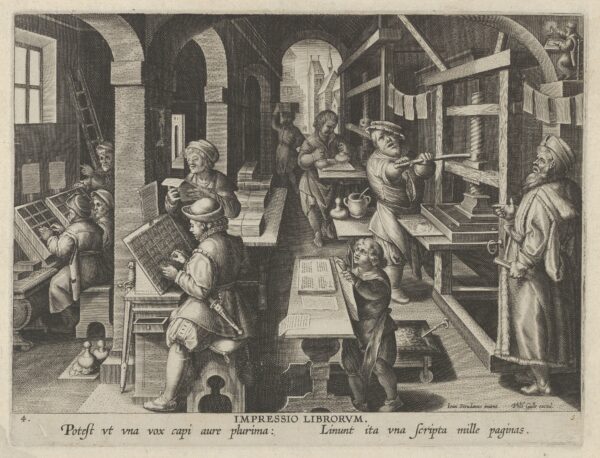
This was the environment in which two Florentines conceived Nova Reperta, whose Latin title is usually translated ‘new discoveries’. One of the earliest works promoting the new attitude – and definitely the most charming – the book is a collection of 19 engravings, each celebrating a discovery or process that was relatively new to Europeans. First published in 1588, Nova Reperta made the argument for progress by showing rather than telling.
Read the rest here. Subscribe to the WiP print edition here. It’s gorgeous!
My next two history columns will look at the early days of TV and the development of disposable diapers. I’m currently exploring a couple of ideas for the fourth entry.
Science YouTuber Hank Green read The Fabric of Civilization after being set upon by the cancel culture of online knitters. He loved it and we had a fun conversation on his show. It also sold at least 800 books in the first week—which is a lot! (It’s currently at 643K views.)
This morning I stumbled on this Reddit thread, which bemoans my appearance and condemns me as politically incorrect. (It also cites my skimpy and weird Wikipedia entry. I eagerly await the day that AI makes Wikipedia obsolete, since there’s no way to correct a bad entry.) A decidedly minority take judging from the comments on the YouTube video.
I also did a wide-ranging interview, pulling ideas from many of my books, with the entrepreneurship-oriented Double Win podcast, hosted by Joel J Miller’s wife Megan and her father Michael Hyatt.
The Cosmos Institute periodically puts together reading recommendations for “philosopher-builders” and I was honored to participate in its winter lineup, plugging a book I’ve been fairly obsessed with: David Wootten’s The Invention of Science (which got a mention in my Nova Reperta column). Check out the full lineup here
I recently discovered three hardback copies of The Power of Glamour left over from an event in 2014. I can tell because they’re signed, with a note of the date and location but no recipient’s name. I would like to give them away to three Substack subscribers.
If you’re interested, please consider the following passages from the book and leave a comment sharing an anecdote or experience showing glamour at work in everyday life. It could be an example of glamour in your own life—what you yearned for, what sparked it, how it felt, etc.—or it could be something you’ve seen in others or in a fictional medium. Although comments can’t directly include images, I encourage commenters to link to images where relevant.
I will select two winners randomly and one based on the comment I like best.
As a psychological phenomenon and rhetorical tool, glamour is like humor. It is an imaginative experience in which communication and association create a recognizably consistent emotional response. With glamour the response is an enjoyable pang of projection, admiration, and longing.
From another section:
First, glamour is an illusion, a “deceitful feeling” or “magic light” that distorts perceptions. The illusion usually begins with a stylized image—visual or mental—of a person, an object, an event, or a setting. The image is not entirely false, but it is deceptive. Its allure is created by obscuring or ignoring some details while heightening others. That selection may reflect deliberate craft. Or it may happen unconsciously, when an audience notices appealing characteristics and ignores discordant elements. In either case, glamour requires the audience’s innocence or, more often, willing suspension of disbelief.
Second, glamour does not exist independently in the glamorous object—it is not a style, personal quality, or aesthetic feature—but emerges through the interaction between object and audience. Glamour is not something you possess but something you perceive, not something you have but something you feel. It is a subjective response to a stimulus. One may strive to construct a glamorous effect, but success depends on the perceiver’s receptive imagination.
“Everyday Abundance,” the podcast
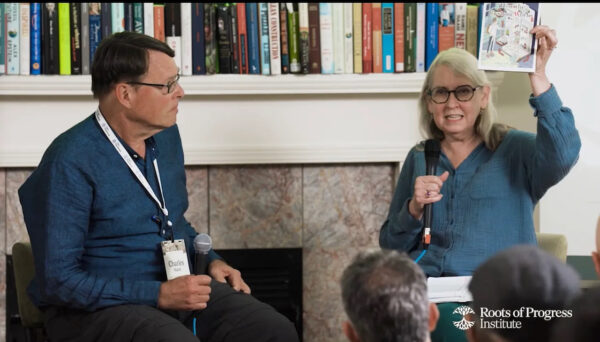
Charles Mann and I discuss his essays on “How the System Works” at the Progress Conference. Video here.
Thanks to support from the Abundance Institute, I’m delighted to announce that Charles Mann and I will soon begin recording the first season (eight episodes) of “Everyday Abundance,” a podcast exploring the hidden histories behind everyday activities and the technologies we don’t even know are technologies. Think “brushing your teeth,” “listening to music,” or, our favorite, “blowing your nose.” We expect to release the first series by early March.
I think he should be remembered most, because I’ve focused on this in my book, for the jailing of peaceful protestors who were urging him to support the Susan B. Anthony amendment at the same time he’s making speeches about democracy. These women were illegally arrested and jailed for trumped up charges of sidewalk obstruction when their only offense was silently displaying signs and banners that literally quoted Wilson’s own speech in favor of democracy. Their sentences were outrageously long for the supposed misdemeanor offense of sidewalk obstruction. Alice Paul got seven months, Lucy Burns got six months.
While they were in prison they were beaten up, some unconscious. Just unbelievable that this could happen for nothing more than pure speech. We can get into this more perhaps during the discussion, but Wilson had direct control over the jails, the police, and the prosecutors in the District of Columbia at that time because they didn’t have home rule. They were not elected leaders. Wilson ran it through a three-member commission. His appointees were journalist friends of his for many years. One of them had hired and trained Wilson’s brother Joe. So, we’ve got uniformed Navy men right outside the White House attacking suffragettes, ripping their banners, in many cases injuring the suffragettes, beating them up, dragging them through the streets and so on.
This is happening right in front of the White House. Wilson did nothing to stop it. In fact, he and his chief of staff, that was called the White House secretary in those days, authorized the arrest not of the mobs that attacked women, but of the women themselves who were silently holding these banners as, of course, they were legally entitled to do. The courts got around to sorting this out later, way too late, after all the punishment was inflicted, and after the government’s objective of stopping the speech was accomplished.
“Old School Civics,” part 1 and part 2, by my friend Jack Henneman, host of the “History of the Americans” podcast. These posts use a 1918 high school textbook to examine how people at the time thought about American citizenship. “How did our ancestors, in many cases people we or our parents knew, learn to be Americans?”
“The Value of Public Domain Day” by Eric Harbeson of Authors Alliance makes a compelling case for requiring a $100 fee and renewal application for the last 20 years of a copyright term. When such fees were required, very few authors applied for extensions, making “painfully clear how the present copyright terms are placing a staggering burden on the public’s right to a return on its investment in copyright.”
This post went out to subscribers to my Substack newsletter on February 16, 2026. Check out all the posts, including ones from the archives not reposted here, and subscribe here.
Ideogram.ai with prompt: “Create an image of J.K. Rowling writing a fan email to Virginia Postrel with a copy of The Fabric of Civilization next to her laptop. Put some Harry Potter books and memorabilia on a bookshelf in the background.”
On his Substack, Neal Stephenson recently posted the following warning: “Just a quick note to mention that I’m being impersonated by someone using the email address “contactnealstephenson (at) gmail (dot) com” and sending out emails consisting of AI slop that I wouldn’t be caught dead writing.”
He isn’t alone!
I constantly get emails purportedly from other writers. The names are usually unfamiliar but, when Googled, turn out to be those of real novelists—always novelists, never nonfiction writers like me—writing in a genre I don’t read. Here’s an example, supposedly from the Canadian YA writer E.K. Johnston, using the email [email protected]:
Hello,
I’m E. K. Johnston, a fellow storyteller with a deep passion for exploring resilience, relationships, and the strength of the human spirit through fiction. Over the years, I’ve been fortunate to share several novels that have resonated with readers, weaving together emotional depth and compelling narratives.
I’d love to learn more about your own writing journey and the stories you’ve brought to life. Please feel free to share your book link, website, Goodreads profile, or Amazon page I’d be delighted to explore your work.
Wishing you inspiration and success in your creative path. I look forward to connecting with you.
Warmly,
Emily
And then there was this one, with the subject line “Admiring The Fabric of Civilization” and more specific references to the book (or at least the description you find of it on Amazon). This email came from [email protected]:
Dear Virginia Postrel,
I hope this note finds you well. My name is J.K. Rowling, author of the Harry Potter series and other novels. I recently read your book The Fabric of Civilization: How Textiles Made the World and felt compelled to reach out to share my admiration.
What struck me most was the way you wove together archaeology, economics, and cultural history into a narrative that feels both deeply researched and beautifully accessible. The connections you draw, from the Minoans’ purple wool exports to the role of textiles in inspiring binary code, made me see how profoundly cloth has shaped not only commerce and politics but the very ways humans think.
Your work reminded me that some of civilization’s greatest leaps come from the most everyday of objects. I was especially fascinated by how you positioned textiles as both material necessity and cultural symbol. May I ask, when you began this project, did you envision it primarily as a history of technology, or as a cultural story that happened to intersect with technology?
Thank you for bringing such originality and clarity to a subject that, as your book shows, is truly the story of humanity itself. I look forward to exploring more of your work, from The Power of Glamour to your Bloomberg columns.
Warm regards, J.K. Rowling
I am not sure exactly what the scam is but I get one of these every other week or so.
I sent the “Rowling” note to Neal Stephenson, who replied: “Wild. So obviously AI generated and customized for you. If these things were being spammed out to millions of people I’d guess it was just a garden variety scam. But it’s hard to imagine what their game is sending out individualized emails to people in the literary world. The science fiction novelist in me thinks it’s something really deep and weird…”
He also shared one of the emails sent under his name, in this case to children’s book author Rebecca Stead, who gave me permission to reproduce it:
Hi Rebecca,
I wanted to write after spending time with The Lost Library. What struck me first was the warmth of the premise, a small-town mystery anchored by a little free library, and how that simple image becomes a doorway into history, memory, and the things a community chooses to keep quiet.
I especially enjoyed the shifting perspectives. Letting the story move between Evan, the ghost librarian, and Mortimer gives the book a layered sense of time and consciousness. It creates a feeling that the town itself is telling the story, not just the people who currently live there.
The connection between the old books and the buried past is handled with a lightness that still carries real emotional weight. The mystery never feels oversized for the age of the characters, but it also doesn’t talk down to them. That balance is difficult to strike, and it gives the story its quiet authority.
I’m glad I read it. It’s a book that understands how stories, and libraries, hold more than just text. They hold memory, permission, and possibility. If you ever feel like talking about how you approached writing a mystery that’s also a meditation on books and truth, I’d enjoy that conversation.
With best wishes,
Neal Stephenson
Ideogram.ai Prompt: “Create an image of science fiction writer Neal Stephenson writing a fan email to Rebecca Stead with a copy of her book The Lost Library (picture here https://rebeccasteadbooks.com/wp-content/uploads/2023/07/book-lost-290.jpg) next to his laptop.” Even when given an image of the actual book cover Ideogram invents its own.
When I asked Rebecca Stead if I could quote her “Neal Stephenson” email, she was quick to agree, writing “My inbox is a misery of false flattery these days - but I've only had two from fake writers, I think. The rest are mysterious entities who adore my work but can't sleep because my Amazon rankings are low.”
I get those too. There are two versions: people who claim to offer ways to reach large communities of readers and people who offer marketing services. It’s possible that the former are “legit,” in the sense that they run pay-to-play book clubs taking advantage of desperate, mostly self-published authors. Here’s an example, notable for its use of the Spanish edition of The Fabric of Civilization in the pitch:
Hi Virginia Postrel,
I hope you’re doing well. My name is Glory, and I run Well-Read Black Girl, a reading community of a little over 12,000 readers who genuinely love discovering and discussing meaningful books.
Your book “El tejido de la civilización” came across my radar recently, and it really struck me as the kind of story our readers connect with and talk about. Because of that, I wanted to reach out personally.
We’re currently curating our 2025 Holiday Spotlight & New Year Showcase, along with our Readers’ Choice End-of-Year Awards, and I think your book could be a great fit for what we’re building.
When we feature an author, it usually includes:
- Spotlight promotion to 12,000+ engaged readers - A written Q&A feature shared across our platforms - Christmas & New Year promotional push - Organic reader discussions, coverage, and reviews - Placement in our 2025 Readers’ Awards consideration
At the heart of it, we just try to connect good books with readers who will genuinely champion them.
If you’re open to it, I’d be happy to send you a short, straightforward overview of how it works and what it looks like on your end.
Would you like me to send that over?
Warm regards, Glory
The book marketers may also be real but are definitely using AI to churn out their emails:
Hello Author Virginia,
I want to start by saying this: every author I’ve ever spoken with whether they’ve written one book or twenty has carried the same hidden fear.
That fear is not of writing the book. It’s not even of publishing it.
It’s the fear of pouring years of passion, discipline, and sacrifice into a story only for it to sit quietly, unnoticed, and unheard in the endless ocean of new releases.
The hardest truth of publishing is this: writing the book is only half the journey. The real battle begins when it’s time to make sure your words are seen, remembered, and carried into the hearts of the readers they were written for.
Here’s the reality that no one says out loud:
If readers can’t find your book, they can’t read it.
If your brand isn’t clear, they’ll forget you the moment they scroll past.
If you’re absent from reader communities, you’ll be left out of the very conversations that create bestsellers.
That’s where I step in.
My name is Lois Goodness, and I help authors bridge the gap between simply publishing and truly being discovered. I specialize in transforming books from “just another release” into lasting brands that readers connect with, remember, and return to.
Here’s how I serve authors like you:
Amazon Global Optimization – I fine-tune your categories, keywords, and book descriptions across Amazon US, UK, Canada, India, Germany, and more so your book is not just published, but globally discoverable.
Book-to-Brand Positioning – You’re not just an author of a single book. You’re a voice, a brand, a storyteller with a message. I help position you as someone readers come back to, book after book.
Reader Community Placement – I get your work in front of readers where they already gather Goodreads, niche communities, book clubs, forums—so your name lives where the conversations happen.
Book Page & Review Enhancement – Your Amazon page should not look like a listing; it should look like a storefront that draws readers in and inspires authentic reviews. That’s what I build for you.
Sustained Visibility Strategies – Launch day is important, but what happens after? I create long-term strategies that keep your book relevant, discoverable, and selling months even years after release.
But beyond strategies and tactics, here’s what I truly believe:
Your book deserves more than to sit quietly on a digital shelf.
It deserves to be discovered.
It deserves to be read.
It deserves to be reviewed, remembered, and passed on.
So let me ask you, as honestly as I can:
Right now, is your biggest struggle visibility, reviews, or sustaining momentum?
Hit “Reply” and tell me in one line. I’ll listen first, and then I’ll show you the exact next step that can change everything for your book.
Because here’s what I know with certainty: your words were not written for silence. They were written to live loudly, to reach the people they were meant for.
And I’d be honored to help make that happen for you.
Warm regards,
Lois Goodness
Book Marketing Specialist
“She” isn’t wrong. The biggest problem for almost all authors is simply getting potential readers to know the book exists. Again, I get these emails all the time.
Someone out there thinks that a good early application of AI is to scrape the web for author emails and entice these desperate souls with admiration, fellowship, and marketing assistance. In the seductive words of an unknown AI pretending to be Lois Goodness, “Your words were not written for silence. They were written to live loudly, to reach the people they were meant for.”
It’s what we all want to hear. But just because an LLM says it doesn’t make it true.
Posted by Virginia Postrel on March 31, 2026 • Comments
This post went out to subscribers to my Substack newsletter on November 20, 2025. Check out all the posts, including ones from the archives not reposted here, and subscribe here.
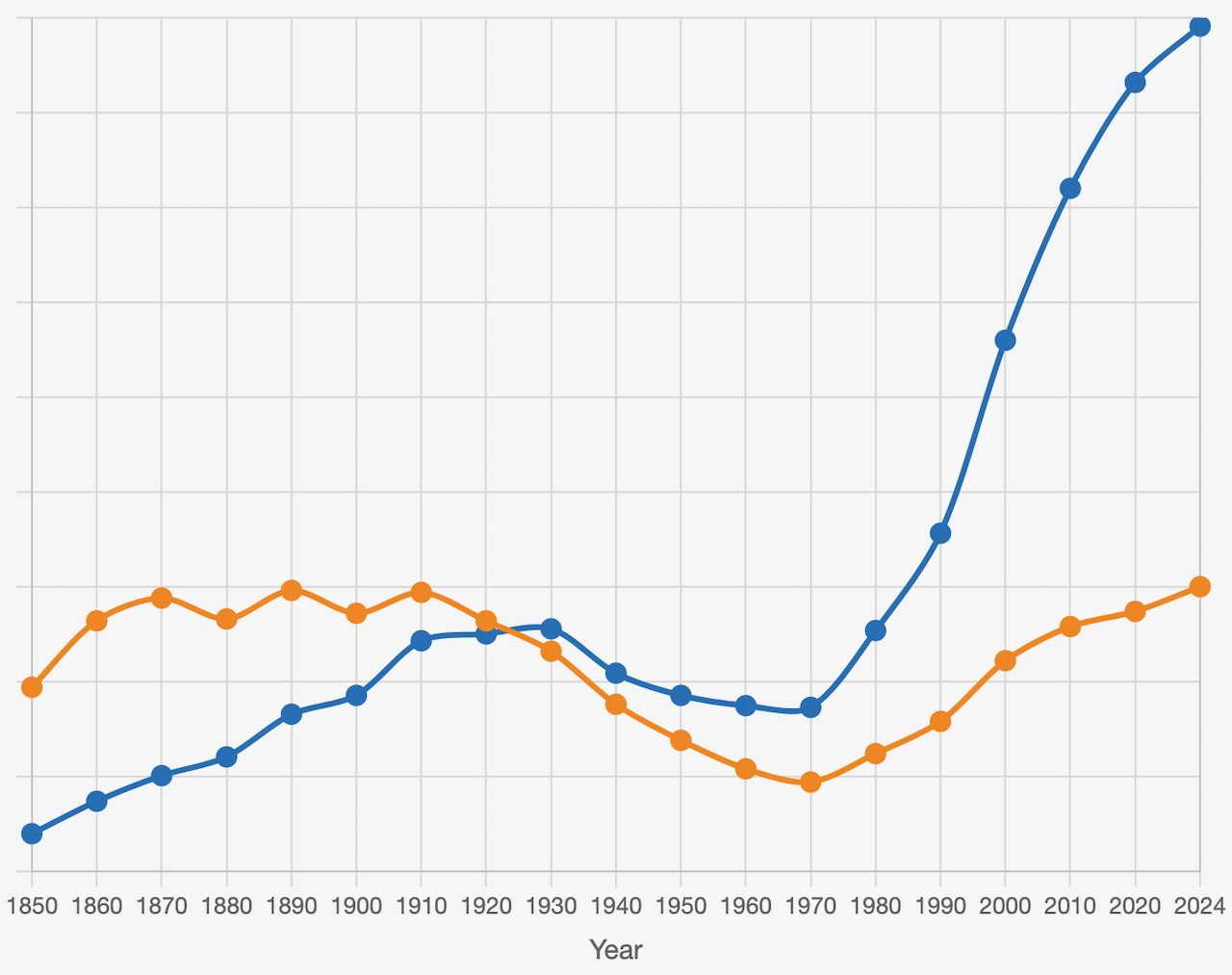
Maybe this chart explains it? Keep reading to find out what it tracks.
Roots of Progress Institute founder Jason Crawford recently hosted me at an Interintellect salon. Our topic was the relation between glamour and progress, inspired by my Works in Progress article. At one point Jason asked a provocative question: Why did the anti-Promethean backlash happen when it did? Earlier periods of technological and economic progress, he noted, had produced demands for more progress, not less. What was different about America circa 1970?
In the WiP article, I point to a combination of complacency among those who’d grown up amid postwar plenty and dissatisfaction with technocratic overreach. But why the complacency? Why not a demand for even more? My article didn’t consider that question.
Brink Lindsey, who coined the term anti-Promethean backlash, cites two possible explanations. First, “as economic security spread throughout the populace, priorities shifted from physical security and material accumulation to self-expression and quality of life.” Second, “as people acquired more, they had more to lose, and accordingly began worrying more about holding on to what they had.” The result was the backlash, defined as “the broad-based cultural turn away from those forms of technological progress that extend and amplify human mastery over the physical world.”
The first explanation entails a shift toward intangible experiences—lots of travel and dining out—and a turn away from the mass-market drive to “not bad” goods to everyone. That certainly happened. (I even wrote a book about one aspect.) But you’ll be hard pressed to detect low demand for physical security or less stuff in either election results or market trends. If anything, heightened concern for physical security, aka “safetyism,” is a major driver of the anti-Promethean backlash. As for loss-aversion, the empirical relationship to income is, as best I can tell, murky. My intuition is to think that if you’re on the material edge you’d be more loss-averse rather than less. But poor people do play the lottery more, so maybe Brink’s right. Either way, I don’t think his explanations fully explain the timing. Why 1970 instead of, say, 1950?
Megan McArdle recently took up the question from a different angle, inspired by reading Emily Post’s 1916 book about driving across America, By Motor to the Golden Gate, The condition of Post’s trip, often on heavily rutted dirt roads, were horrendous. But Megan was most struck by “the incredible optimism and wild ambition that runs through Post’s America. The Midwest, particularly, seems to be in the middle of a youthful growth spurt, with cities springing up out of the prairie full of vim and vigor and plans for the future.” (Emphasis added. I will return to this point.)
Our longing for that lost sense of optimism, Megan argues, shapes contemporary politics. On both left and right, activists “are asking why we can’t recapture the spirit of an age when America felt young and hopeful and capable of doing extraordinary things.” The reason we don’t feel that way now, she suggests, is that we’ve been too successful. Indoor plumbing is exciting when you get it, a third bathroom nice but not life-changing. The same is true for highways, bridges, railroads, and dams.1 “The political trade-offs are now harder, because we’re chasing incremental improvements, not life-altering change,” she writes. Youth, hope, and extraordinary achievement belong, in this gloomy analysis, to developing countries, China in particular.
I’m more optimistic, because Jason’s question pointed me to something I hadn’t previously considered. My first instinct, as a student of English literature, was to say that Jason was wrong. The 20th-century anti-Promethean backlash wasn’t unique. The Industrial Revolution generated one as well.
Victorian England produced many influential writers and artists, including John Ruskin, William Morris, and Augustus Pugin, who deplored modern industry and promoted an idealized medievalism. Their ideas left a permanent mark on intellectual life but had little immediate effect on the pace or direction of industrial change.2 Medievalism sold as a style but not as a political agenda.3 Its legacies were primarily aesthetic, realized in Gothic revival architecture, Arthurian poetry, pre-Raphaelite painting, and the British Arts and Crafts movement. The social criticism that actually transformed Britain demanded more for working people—political power and material abundance for the masses, not a return to feudal roles or an end to factories and machine-made goods. As long as a significant proportion of the population lived in material deprivation, the salient debates were over how to distribute the fruits of Promethean industry, not whether that industry was a good idea.
Besides, Jason wasn’t asking about the Old World. The United States lacked even Britain’s intellectual backlash. Americans who objected to industrial progress remained niche players, idealizing the ante-bellum South.4 There was plenty of dissatisfaction and conflict, of course. We had labor strife and muckrakers; socialists, anarchists, and populists; Edward Bellamy and the National Grange. But medievalism was confined to wallpaper and architecture, often installed or financed by industrial magnates. Feudalism wasn’t on the American agenda. What was different here? And what might it tell us about 1970?
As I talked to Jason, several things suddenly came together: the Old World vs. the New, multiple conversations with young people at the Progress Conference, and a passage from Willa Cather’s The Song of the Lark:
She had often heard Mrs. Kronborg say that she “believed in immigration,” and so did Thea believe in it. This earth [the midwestern prairie] seemed to her young and fresh and kindly, a place where refugees from old, sad countries were given another chance. The mere absence of rocks gave the soil a kind of amiability and generosity, and the absence of natural boundaries gave the spirit a wider range. Wire fences might mark the end of a man’s pasture, but they could not shut in his thoughts as mountains and forests can. It was over flat lands like this, stretching out to drink the sun, that the larks sang—and one’s heart sang there, too. Thea was glad that this was her country, even if one did not learn to speak elegantly there. It was, somehow, an honest country, and there was a new song in that blue air which had never been sung in the world before.
That’s the spirit of the midwestern growth spurt, of “cities springing up out of the prairie full of vim and vigor and plans for the future.”
I did some mental arithmetic and suggested a hypothesis. The young Americans who proved so receptive to anti-Promethean ideas in the 1960s and 70s—those born starting from the late 1920s onward—weren’t just richer than previous generations. They were the products of the country’s four decades of restricting immigration. Instead of an America renewed by people looking for another chance, they had grown up in a more complacent society. These immigrant-deprived generations were much more likely than earlier generations to embrace and amplify anti-Promethean ideas, providing a mass of public support.
Later, I found remarkably congruent statistics. Nineteen seventy marked was the first Earth Day.5 It was also the year in which the percentage of the U.S. population made up of immigrants reached its nadir, with the total number of immigrants at the lowest point in a century.
Internal migration, which surged after World War II, had declined as well. The “Second Great Migration” of blacks from the South ended around that time. Domestic migration to California, arguably the vanguard of the anti-Promethean backlash, peaked in the late 1950s, then declined significantly, occasionally turning negative. The resurgence in the 1980s, which was accompanied by large-scale international immigration, set off a “growth control” movement that resulted in new building restrictions.6
Hans P. Johnson, “Movin’ Out Domestic Migration to and from California in the 1990s,” Public Policy Institute of California, August 2000, available here.
The anti-Promethean backlash arose when America was most like a normal, settled country rather than a nation of strivers seeking a better life. It intensified when the people who accepted the more static America tried to preserve it by legally restricting “human mastery over the physical world,” from power plants to housing construction.
My unscientific observation is that the progress and abundance movement is full of the children of immigrants. We seem due for a turnaround.
Creative Frontiers: a great new Substack from historian/musician John Hardin of the Abundance Institute. This post on how Duke Ellington used the microphone to create a whole new sound is fascinating. His latest is on AI-generated music and The Chipmunks. Check it out.
“The Middle-aged Millennial,” a delightful short tale by Naomi Kanakia whose opening explains its literary inspiration: “One day Rajiv woke up and realized that he was in a Cheever story!” I haven’t read Cheever but I have a feeling I prefer Kanakia. The story’s ending is surprising, funny, and wise.
Posted by Virginia Postrel on March 28, 2026 • Comments
Check out my new video on a strange little episode in textile history. Be sure to watch to the end--there's a surprise. For more videos, please subscribe to my YouTube channel, youtube.com/@vpostrel.
Posted by Virginia Postrel on September 24, 2024 • Comments
This post went out to subscribers to my Substack newsletter on July 10, 2023. Check out all the posts, including ones from the archives not reposted here, and subscribe here.
Midjourney homeless encampment in the style of Edvard Munch
One of my condo association neighbors recently put an old sofa out on the curb for pick up by the city’s “bulk items” collection service. The city missed a few promised pickups. Before we knew it, a group of vagrants had made themselves at home and were eating, drinking, and littering. After receiving multiple complaints, the city finally agreed to a date certain. My neighbor put the couch in storage and tried to sanitize the now-stinky area. He and I picked up most of the trash.
Such is life in today’s West L.A. We don’t have the most scary homeless people—this isn’t San Francisco—but we certainly have a lot of usually messy campsites on sidewalks, in parks, and in nearly derelict RVs by the side of the road.1
The photo another neighbor sent me, as president of the HOA, to complain about the sofa and its denizens.
In one of the most hyper-regulated places this side of Singapore, the level of public disorder is disturbing. Everyone complains about it. A recent LAT op-ed titled “Why my pyromaniac neighbor lives outside the law,” captures the frustrations of the compassionate liberal with a lick of sense:
Anyone who walks L.A.’s streets or takes our public transit understands that people experiencing homelessness effectively exist in a state of lawlessness. It feels as if authorities are unwilling to intervene except in cases of serious crimes committed against housed people. Under Dist. Atty. George Gascón, the city largely does not prosecute misdemeanor offenses such as drug possession and disturbing the peace that he says are linked to addiction or homelessness.
This is admirable in the abstract, and ideally the police would not be the city’s point of contact for our unhoused population. But increasingly this disregard seems to have filtered to the general citizenry as well, and it feels as if we have simply become accustomed to seeing people passed out in the street, or smoking meth on the sidewalk.
The belief that we are showing people experiencing homelessness compassion if we spare them the attention of law enforcement is understandable but is fundamentally misguided. Through volunteer work and by talking to people in my neighborhood, I have met many unhoused people. Most of them do not set things on fire. They do not walk naked through traffic, and whatever issues they have with substance abuse they keep mostly to themselves. In my experience, the majority of crimes committed against people experiencing homelessness are never reported because they are most often perpetrated by other unhoused people. Placing the unhoused outside the consequence of law also means placing them outside its protection.
Moreover, the city’s failure to enforce the law among the homeless population puts that burden on private citizens, with potentially awful results. Despite all my experience working with the unhoused, I was scared and furious the last time I saw J. It isn’t hard to imagine our interaction ending badly. We don’t ask Angelenos to put out fires unless they are trained professionals, nor should we have them serve as de facto homeless outreach workers. Doing so fuels the tensions between the housed and unhoused citizens of Los Angeles.
A Ninth Circuit court decision equating bans on living on sidewalks and parks with cruel and unusual punishment limits what public authorities can do. (When the court recently affirmed the matter en banc, its conservative judges issued scathing dissents.) Along from the legal restrictions, there is a powerful cultural taboo against considering the public order aspects of homelessness, as opposed to its humanitarian dimension. We’re supposed to choose empathy over order, as though they can’t coexist.
In a recent New Yorker column, Jay Caspian Kang writes that “much of the public’s confusion about what should be done about the crisis comes from a fundamental misunderstanding of what homelessness actually looks like.” He then goes on to explain, correctly, that public attention focuses on a small fraction of the Californians without shelter.
When the state of California talks about homelessness, it’s largely drawing upon a consensus of experts and advocates who want to employ an evidence-based approach to the issue, aiming to prevent people from slipping deeper into homelessness—whether from housed to unhoused, or from short-term to chronic. When aggrieved individuals talk about homelessness, they’re often talking about their visceral response to the “service resistant” individuals who make up just a fraction of the over-all homeless population. The average homeowner or renter in San Francisco or Los Angeles doesn’t really care who might be staying in the shelter system, nor does he care all that much if a family has decided to crash for a few nights in a car (as long as it’s not parked on his block). He cares when he walks down the street to his office and has to pass through encampments, or when someone walks onto a bus and starts to act erratically. He doesn’t see how building housing for mostly stable people who are quietly living in cars actually addresses the problem.
If you define “the problem” as people without homes, then Kang’s more-evidence-based-than-thou attitude makes sense. But there are actually two different problems. One is about housing and the other is about public behavior. As someone who writes, reads, and cares a lot about housing—I’ve gone to public meetings and sent emails to legislators—I fully understand that California has a housing shortage. That shortage hits economically precarious people especially hard. It’s ridiculous that Californians can live on the sidewalk but can’t swiftly construct new apartment buildings without endless reviews and expensive mandates. Supportive housing alternatives can indeed help vulnerable people. Kang’s favored “evidence-based approach to the issue” is fine and dandy if you define the problem as only about housing and dismiss other concerns with phrases like “aggrieved individuals.”
But policies to address the housing problem, however worthy, do not make complaints about the public order problem illegitimate. Normal people want to safely use the sidewalks, parks, subways, and bus stops that supposedly exist for everyone’s benefit. Safe camping sites, like the ones San Diego has opened, are a constructive alternative—but they’re paired with restrictions on “unsafe camping” that push people to use them. More could be done to provide similar safe spots, with toilet facilities, for people living in RVs they don’t want to give up in return for inside shelter that might later disappear. (In their situation, I’d make the same decision.)
If you want to build political support for the “mostly stable people who are quietly living in cars,” you can’t do it by pretending you’re addressing the visible problems that scare normal people. The current bait-and-switch breeds resentment, undermines civic institutions, and drives away the productive inhabitants on whom flourishing cities depend.
Posted by Virginia Postrel on August 13, 2024 • Comments
This post went out to subscribers to my Substack newsletter on June 3, 2023. Check out all the posts, including ones from the archives not reposted here, and subscribe here.
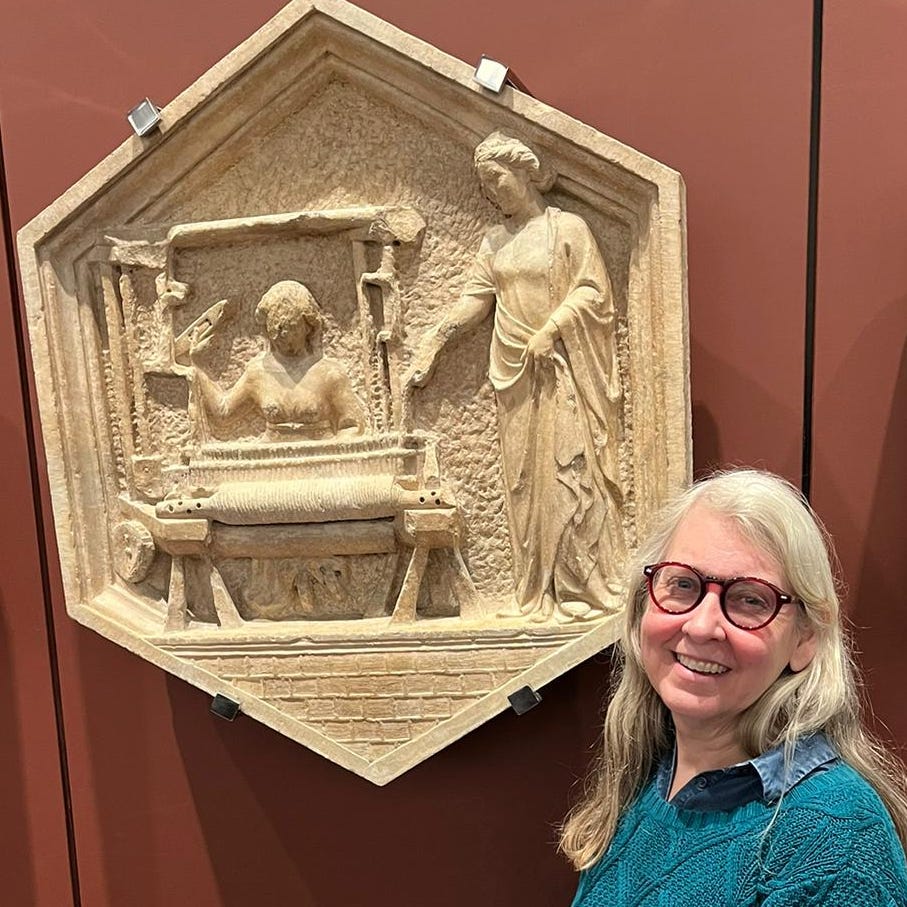
With Andrea Pisano’s weaver, 1348–1350, in the Museo dell'Opera del Duomo, Florence. Originally on the facade of the Campanile (bell tower), it has been replaced by a replica and moved inside to protect it.
The textile trade, including the banking institutions that it fostered, made Florence rich. The production, finishing, and sale of cloth funded the art that now supports the city’s tourist industry. Its greatest single artwork may be famously nude, but traces of the central role of textiles are everywhere in Florence.
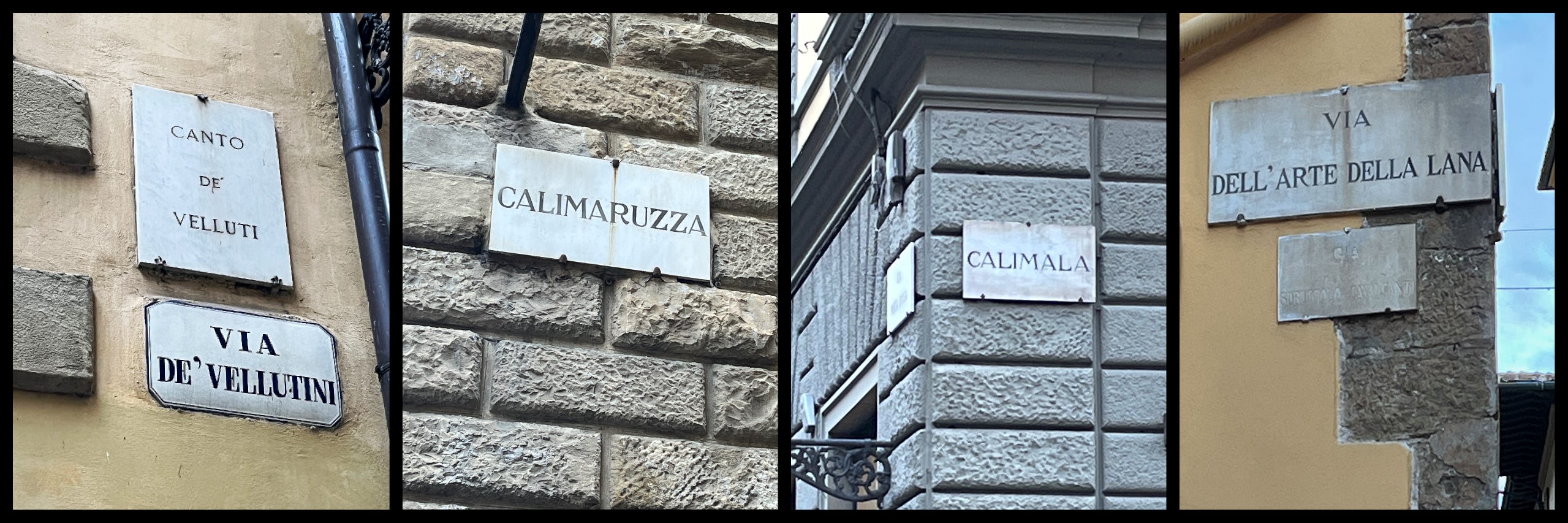
Take the street names: Via de’Vellutini and Canto de Velluti refer to velvets. Calimaruzza and Calimala are named for the guild that finished and sold foreign cloth, such as English woolens, while the Via Dell’Arte della Lana is named for the wool guild. Its symbol of the Lamb of God with a banner is everywhere—a seemingly religious sign that is as much a commercial brand as an Apple with a bite out of it.
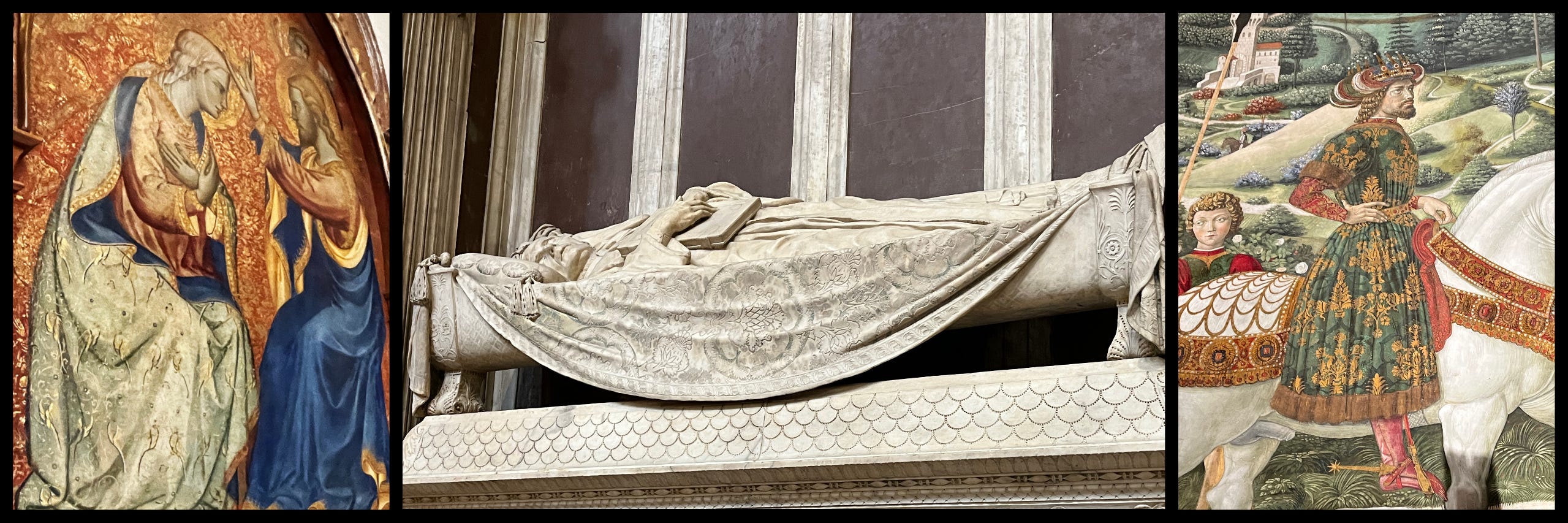
The city’s luxurious silks mostly show up in paintings. Art historian Rembrandt Duits argues that the abundant gold brocades represent in cheaper paint what even the wealthiest Florentines couldn’t afford in real life.
Even without the gold, weaving such complex patterns was incredibly time-consuming and labor-intensive before Jean-Marie Jacquard’s famous punchcard system automated them at the turn of the 19th century. If you visit a still-existing workshop like the Antico Setificio Fiorentino in Florence or Tessitura Luigi Bevilacqua in Venice, you will see what now looks like a laborious process. But it’s actually speedy and high-tech. These artisans use Jacquard looms, which can be operated by a single weaver, without an assistant to lift pattern threads. Coded into cards, the patterns can also be stored and reused. Here’s an 18th-century depiction of a European draw loom, with figures showing the weaver and the “draw boy (or girl)” who pulled the pattern threads. Every single pass across the loom required a different selection of threads, and the setup was new for each new pattern. (For more details see chapter three of The Fabric of Civilization.)
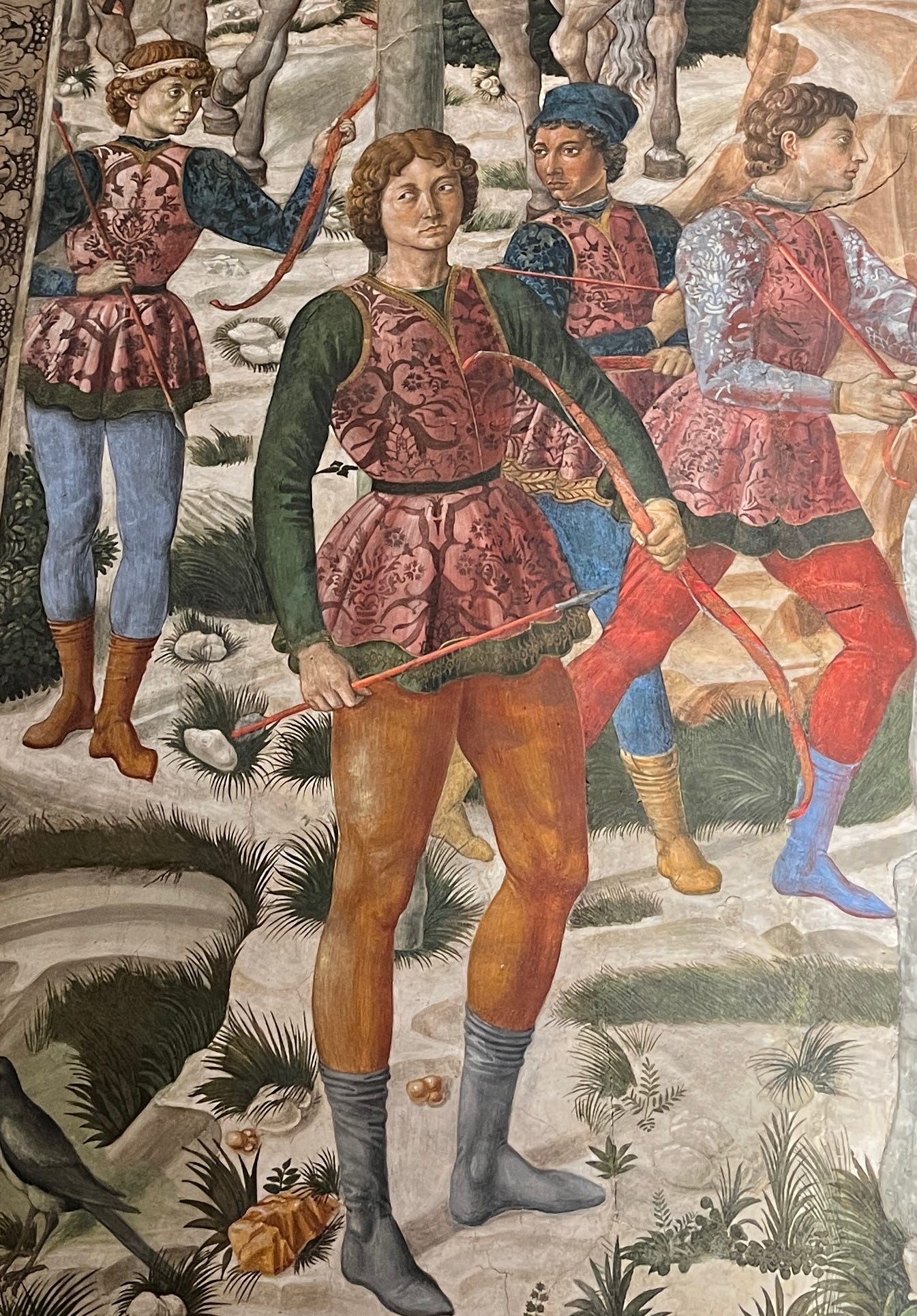
Having written about Florentine sumptuary laws, I was also amused to see the mini-tunics, or pannos curtos (“short cloths”), that revealed men’s legs above the middle of the thigh when standing. Under a law passed in 1373, such sexy styles were prohibited unless the wearer paid a fine/fee of 10 florins. They were still in evidence decades later. Aside from showing off men’s muscled legs, they economized on expensive cloth, surely saving more than the value of the fine.
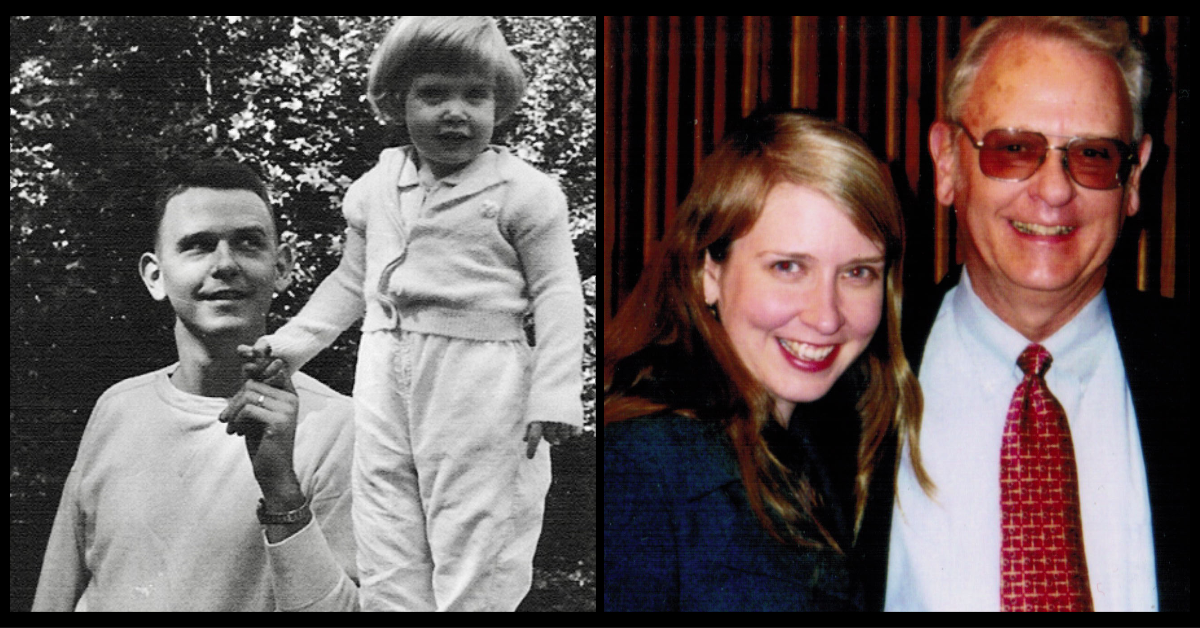
My father died recently, after a rapid decline into dementia and a period of failing physical health that began with a fall in December. Unlike many women, I have been blessed to be surrounded all my life by good men, starting with Daddy and including my three brothers and later Steven. My father believed I could do anything, and he adored my mother, his own mother, and his big sister. Traditional in many respects, he never doubted the capability of women. Here are my favorite photos of Daddy and me together, the first when I was about two and the second on my book tour for The Future and Its Enemies.
With a few contributions from the rest of us, my brother Sam wrote a terrific obituary:
A devoted husband, father, preacher’s son, brother, uncle, mentor, coach, raconteur, trouble-shooter, carpenter, repairman, friend, and church leader, Samuel Martin Inman, III, age 88, passed away May 15, 2023, of old age: a venerable way to exit this modern era and begin a refreshed life with his Lord.
The Reverend Samuel M. Inman and Margaret Garwood Inman raised Sam and his older and surviving sister Margaret first in Richmond, Virginia, and then in Charlotte, North Carolina. Following his being among the first class to graduate the new Myers Park High School, Sam played tennis for Davidson College and graduated in 1956, having majored in mathematics and minored in physics. Within 18 months thereafter, Sam also graduated with an industrial engineering degree from the Georgia Institute of Technology (Georgia Tech). During his time in Atlanta, Sam found a focus of his love and attention for the next 67 years: the outgoing, intelligent, transplanted Arkansas Presbyterian Sue Sanders Lile, whom he married in 1958. As he began his career in the newfangled field of commercial plastics, he also served in the United States Army Reserves for 6 ½ years, with a year of active duty at Fort Benning, Georgia, during the Berlin and Cuban Missile Crises.
Sam worked for Celanese Corporation in Rome, Georgia, followed by a transfer with the company to Greenville, where he was a part of the design team that built the Greer (SC) Celanese Polyester Films Plant. Over the course of his professional career, Sam became the manufacturer’s go-to guy in solving problems in production, quality control, research and development, and technical service. In 1992, the successor to Celanese — Hoechst Diafoil — sent him and Sue to Japan, where he spent a year as liaison representative for the joint plastics venture that included operations in Germany (Hoechst AG), the USA (Celanese), and Japan (Mitsubishi Diafoil). A Japanese colleague dubbed him “Mr. Polyester,” which we think was a supreme compliment.
Active in Greenville’s Westminster Presbyterian Church since 1963, Sam served as an elder, deacon, Sunday school teacher, youth advisor, basketball coach, and a member of a pulpit nominating committee. For several years, he taught in the “Life Skills” program at United Ministries as part of the pre-GED Program. He served as chairman of the chemistry advisory committee at Greenville Technical College, chairman of the Presbyterian Pastoral Counseling Center, advisor to the Foothills Presbytery for various church strategies and operations, and as a board member and a lead carpenter for The Warehouse Theater. And in his “spare time,” he co-coached youth baseball teams with the YMCA and City League to multiple undefeated seasons.
His passions were rooted in his energetic church and dynamic family, both now spread like a proverbial banyan tree that his father often used in parable. Sam loved walking in the woods, whether in northern Georgia, the two Carolinas, or the West. He loved American history, especially of the Southeast, and was known to breeze through and retain the thoughts and facts of the thickest historical novels that The Open Book stores in Greenville could offer.
Sam is survived by his wife of 64 years, Sue Lile Inman, and their adult children and spouses: Virginia and Steven Postrel, Los Angeles; Sam and Jamie Inman, Greenville, SC; Drs. John and Amy Inman, Mt. Pleasant, SC; and Bill and Karen Inman, Bend, OR. His four treasured grandchildren – Rachel, Nathan, Andrew, and Katherine – also survive him.
A memorial service will be held at Westminster Presbyterian Church on Saturday, June 17, 2023, at 12:00 p.m., followed by a reception in the church atrium.
Memorials may be made to Westminster Presbyterian Church Endowment Fund, 2310 Augusta Street, Greenville, SC 29605, www.wpc-online.org; United Ministries, 606 Pendleton Street, Greenville, SC 29601, www.unitedministries.org; or a charity of one’s choice.
Posted by Virginia Postrel on August 13, 2024 • Comments
This post went out to subscribers to my Substack newsletter on May 1, 2023. Check out all the posts, including ones from the archives not reposted here, and subscribe here.
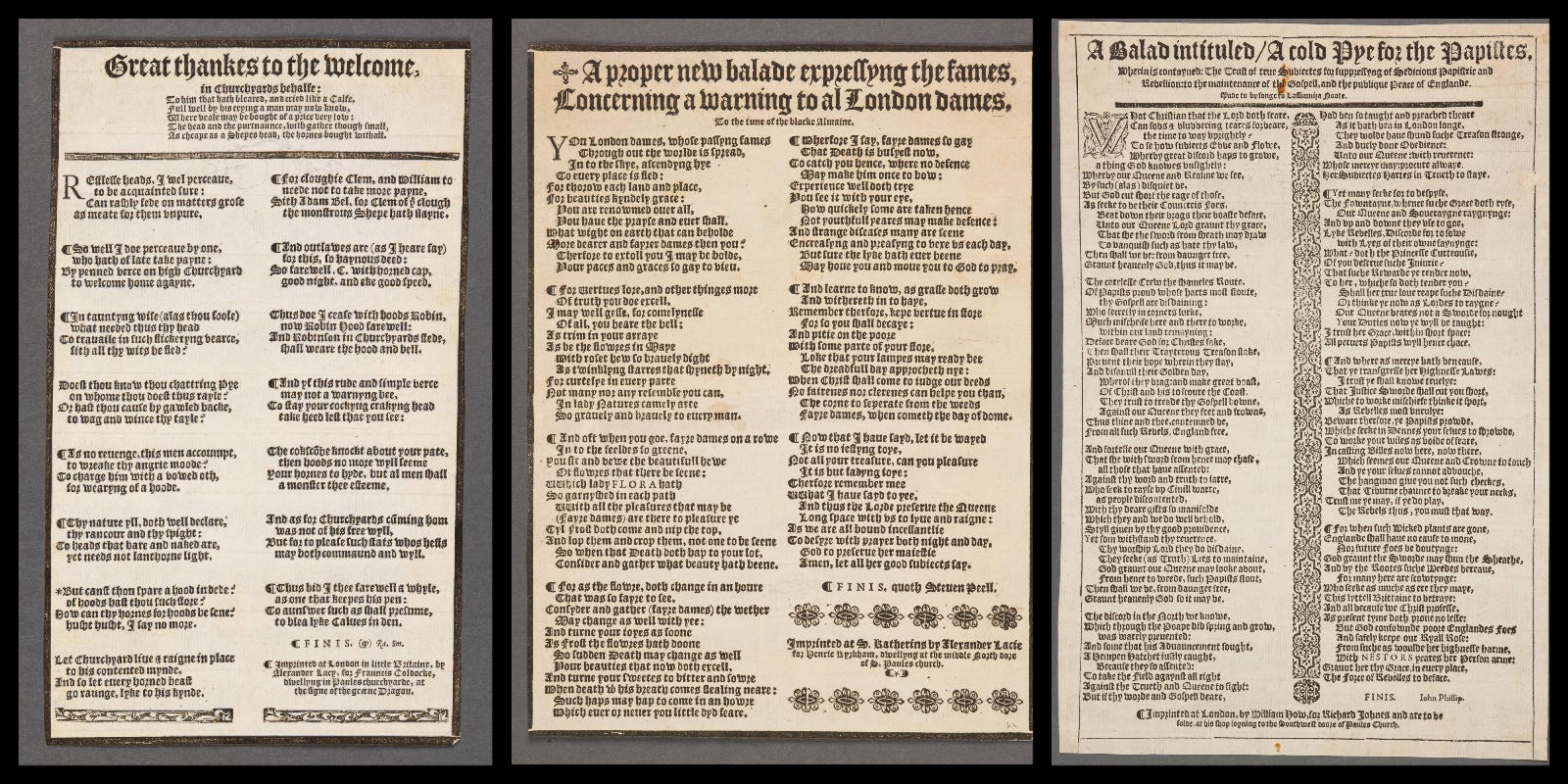
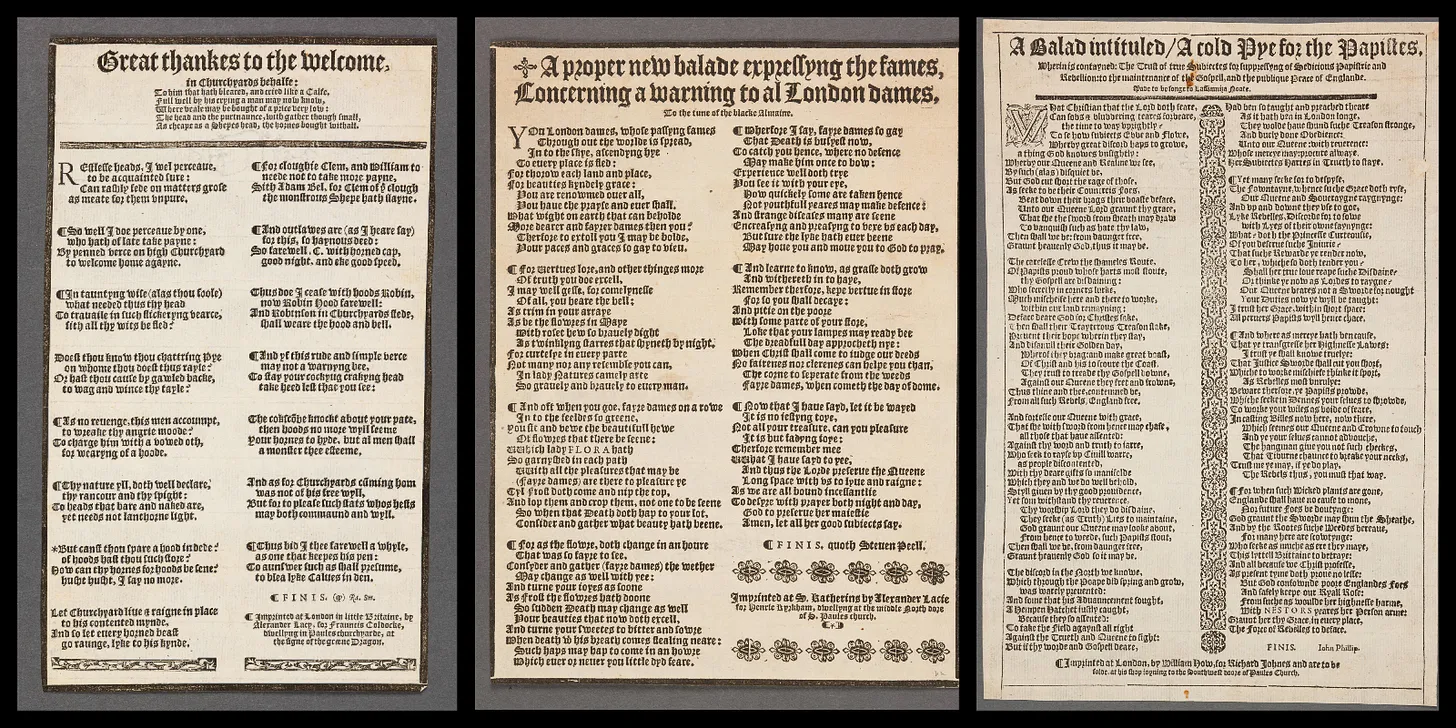
Early popular music products in the form of 16th-century ballads, for sale for a penny or two. Images courtesy of the Huntington Library, whose collection includes about 600 16th- and 17th-century broadside ballads. To see a larger version, click here.
In his 1998 book, The Economy of Obligation historian Craig Muldrew examines the expansion of what he calls “marketing” in Elizabethan England. By this term he means the specialized commercial relations we now take for granted: “the way in which goods were bought and sold, and moved around by traders, wholesalers and other middlemen, and how credit was used to facilitate such exchange and create wealth generated through profit.” Over a relatively short period, England went from an economy dominated by household production and direct selling by local farmers and craftsmen to a more complex and extended commercial order.
Goods like coal, soap, iron, and textiles traveled around the country, becoming much more readily available to ordinary people outside London. In the Norfolk town of King’s Lynn, for example, the amount of soap imported from London more than tripled from 1566 (when Shakespeare was a two-year-old) to 1586. The economic expansion included entertainment as well. Alehouses boomed, as did consumption of beer, formerly a luxury. A popular music industry began, with 3 million to 4 million printed ballads sold for a penny or two each in the late 16th century. Foreign goods like sugar, currants, lemons, and peppercorns became more common. In 1581, Muldrew reports, “21,000 oranges and lemons reached Norwich in time for [London’s] Bartholomew Fair.”
In what has been called the “great rebuilding” of rural England, homes installed glass windows, plaster ceilings, and, most important, fireplaces with chimneys. Many added rooms, along with more and better furniture and kitchen tools. “Such improvements,” Muldrew observes, “mean there must have been a concurrent growth in the market for the services of carpenters, glaziers and bricklayers, and in the sale of material manufactures for such rebuilding and furnishing.”
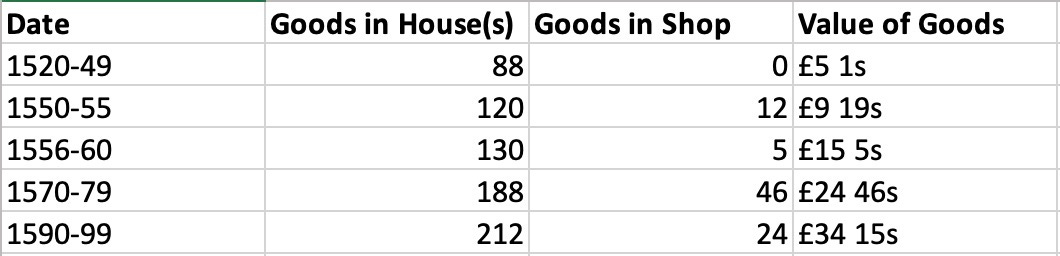
Muldrew combs through probate inventories, counting the number of items listed to find out just how much stuff people owned. Here’s an example, showing the average numbers of goods (not including clothing) per household in Chesterfield. The numbers are small, but the percentage increase is significant.
Even poor people had more goods than their ancestors. Farmers exchanged straw for feather beds and wooden plates for pewter. William Barat, a mariner, died with goods worth a paltry £2 4s, while owing £6 9s. “He had just one hearth in the kitchen and most of his possessions consisted of old things of little value,” Muldrew writes, “but he still possessed a number of inexpensive ‘luxury’ goods including satin towels, hangings in the hall, pewter flower pots, valences for his bed and painted cloth.” The better-off Richard Rastryck, a Southampton porter,1 left £10 worth of household goods in 1575, suggesting a modest standard of living. Nevertheless, writes Muldrew, “there were over 225 items in a five-room house with two hearths. These included three flock beds, six feather pillows, four spice plates, a number of pieces of pewter, five silver rings and a number of painted cloths.” Many of these goods were old or cheap, but that’s the point. Thanks to the expansion of trade, transportation, and specialized production, for the first time, ordinary people had access to goods once considered luxuries.
The transformation increased the country’s prosperity but was also disruptive in ways that resonate today. Rents rose, and labor was no longer as short as it had been in the previous era. “After 1540 consumption expanded, but the previous security disappeared, as families had to compete for work,” writes Muldrew. “Some did well, while others failed.” More goods were available, raising the standard of living, but attaining it felt less certain.
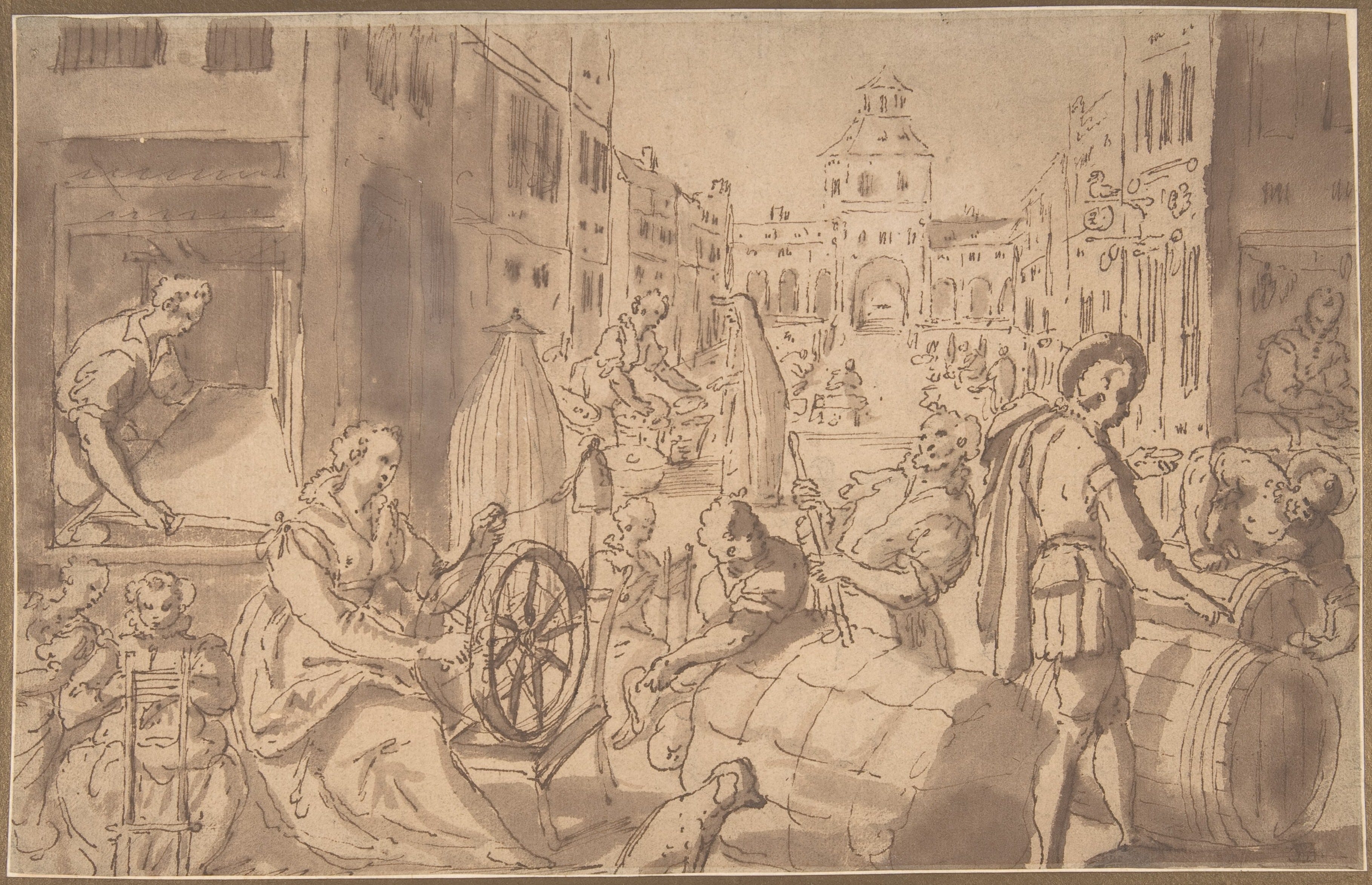
16th-century market scene. The Elizabethans weren’t big on depicting ordinary people and activities in art, so I’m going with a Netherlandish drawing from the Metropolitan Museum of Art. Most of the paintings you’ll see online claiming to illustrate Elizabethan food or markets are actually from the Low Countries.
What struck me the most about Muldrew’s findings (and I’m still reading the book) is the way the gains were skewed. Some ordinary farmers and tradesmen benefited from the expansion of markets for their goods and services. Others did not. So within the same original social class, there were winners and losers.
So the losers didn’t have to be objectively worse off to feel that way. Muldrew cites mason John Clark, whose estate included only 17 items worth a mere £1 6s. “But even he owned better quality goods than someone in a similar situation might have 30 years earlier, for he had a half feather, half flock bed and a painted hanging, but he was very much poorer than many of his neighbours.” Of such contrasts is economic nostalgia born.
Muldrew observes:
What was much more important than any absolute rise or decline in the living standards of poor families was the fact that many of their neighbours had become much wealthier over the course of the century, and it was in comparison to their improved standard of living that poorer households seemed worse off. Also, because wealthier households had bettered themselves, they consequently interpreted the lack of mobility, or downward mobility, of poorer households as competitive failure.
Similarly, if in the mid-20th century an American family was solidly middle class (say, the third quintile of income) and its children went to college, they’re likely now in the top two quintiles of income. If they didn’t go to college, they’re much less likely to have risen and may be relatively worse off than their parents. Either way, however, they have a lot more stuff, including goods and services that were unimaginable 50 years ago. But, like the Elizabethans, contemporary Americans who feel poorer than their former economic peers resent their relative decline, while the upwardly mobile mistake their rise for personal superiority. Both groups tend to forget what the recent past was really like. And commentators decry the terrible state of things.
This post went out to subscribers to my Substack newsletter on April 23, 2023. Check out all the posts, including ones from the archives not reposted here, and subscribe here.
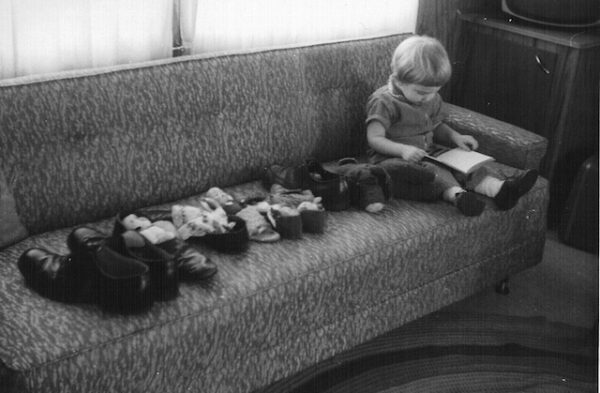
"Reading" to my dolls circa age 2.
What I’ve been reading:
The Man Who Loved China by Simon Winchester (audio, listened to twice, should buy the Kindle edition for future reference): Beginning during World War II, Joseph Needham collected and read countless historic manuscripts and books from China and, by pulling together the information they contained into his massive, multivolume Science and Civilisation in China fundamentally altered our understanding of the history of science and technology. Although it’s hardly the most important fruit of this work, I can’t imagine The Fabric of Civilization without it.
The Perfectionists: How Precision Engineers Created the Modern World by Simon Winchester (audio, then bought Kindle). I found the earlier chapters of this book more interesting than the more recent ones. But that’s probably more a reflection of my interest than the book’s strengths.
Wild Swans by Jung Chang (audio, then bought paper) Massive, best-selling book telling the story of modern China through the stories of the author, her parents (officially her mother, but her father is more than a background figure), and herself. It’s very good at showing the complexities of the Chinese Civil War and resistance to Japan, demonstrating why someone would join the early Maoists, and capturing the devastation of the Great Leap Forward famine and the Cultural Revolution.
China’s Good War by Rana Mitter (audio, then bought paper) Fascinating book on how China has revised the scholarly and official understandings of World War II, reincorporating the Nationalist resistance to Japan. The book discusses both serious scholarship and propaganda purposes.
Greetings from Bury Park by Sarfraz Manzoor (audio, after watching the movie, Blinded by the Light, which was based on it). Mostly just fun, especially if you like Bruce Springsteen. Also a window into Pakistani immigrants in the UK.
A Lost Lady by Willa Cather (audio, after reading that Cather hated the movie made from it, which does sound like a travesty). I’m slowly becoming a Cather completist. I have a Kindle collection of all her works so I’ll probably read that version as well. If you haven’t read it, check out my post on her.
The Jewel House: Elizabethan London and the Scientific Revolution (Kindle) I still in the midst of this book on the specimen collectors and experimenters centered on Lime Street in London. They’re distinguished from later natural philosophers by both their methodology—mostly collecting and exchanging specimens—and their economic positions. These were people who worked at regular jobs rather than academics or aristocrats. Not riveting but solid research on a little-explored aspect of early modern science.
I’m also working through a stack of books on early retailing, credit, and consumption. Interlibrary Loan is one of the great perks of being at Chapman.
Posted by Virginia Postrel on July 19, 2024 • Comments
This post went out to subscribers to my Substack newsletter on April 2, 2023. Check out all the posts, including ones from the archives not reposted here, and subscribe here.
The death of Gordon Moore, the Intel co-founder and semiconductor pioneer famous for “Moore’s Law,” is the latest reminder that the so-called Silent Generation is insanely misnamed. The generation born between about 1926 and 1945 is the one that changed the world in politics, science, art, sports, and business. The so-called Silents led the civil rights and second-wave feminist movements, built Silicon Valley and the New Hollywood, developed Pop Art and rock music. Silents walked on the moon.
The 1951 Time article credited with popularizing the term Silent Generation declared that “Today’s generation, either through fear, passivity or conviction, is ready to conform.” But it also reported signs of discontent. “This generation suffers from lack of worlds to conquer. Its fathers in a sense, did too well,” said one young man. A young woman lamented, “The individual is almost dead today, but the young people are unaware of it. They think of themselves as individuals, but really they are not.”
In a relatively small generation, a few creative dissidents could catalyze change. Individual Silents faced less competition for attention and resources than members of larger generations. They also enjoyed the possibilities opened up after World War II, whether American prosperity or the weakening of class strictures in Britain. Silents became the leaders that the Baby Boomers, arguably a more conformist bunch, followed.
Although there are more famous Silents, Stewart Brand may be their quintessential representative. He’s always slightly ahead off the curve. Back in the 1990s, he observed to me that his generation didn’t think business was bad, even when they were rebelling against corporate conformity. So they were naturally placed to lead an entrepreneurial revolution. (I’m remembering a very old conversation, so take the details with a grain of salt.) Stewart is the person who told me about Amazon.com when it was a brand new company, leading to this article. His then-new book How Buildings Learn was one of the first titles I ordered online and it had a significant influence on The Future and Its Enemies. My decidedly un-hippie father, born in 1934, was an early buyer of The Whole Earth Catalog. Its “access to tools” philosophy anticipated our technology-empowered DIY culture (see my 2007 take on the trend, which has only gotten stronger).
And here’s another Silent recently in the news.
About those aviator shades
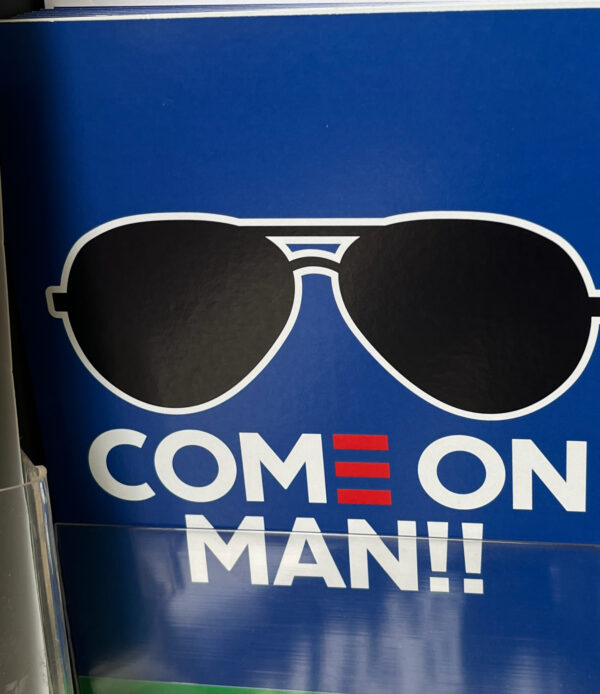
My Foreign Policy article on Silent Generation President Joe Biden’s aviator sunglasses is now out and available for comparison to the ChatGPT version. I don’t love the headline, which conflates appearance and reality (or A&R, as we called it when discussing Renaissance literature in college). I encourage you to read the whole thing, using an incognito window if you hit the paywall. Here’s a excerpt:
In Vanity Fair in August 2020, Erin Vanderhoof skewered Biden as insufficiently radical, writing that the glasses “stand in as a symbol for why so many young people feel disillusioned by the candidate. Six decades ago, Biden picked an accessory and he has stuck with it ever since … . It seems to reflect his approach to ideas like bipartisanship and respect for norms.”
But that continuity—including the promise of respect for norms—appealed to much of the electorate, which wasn’t ready to write off the United States as an irredeemably awful country or make a virtue of demonizing their fellow citizens. Like Trump’s MAGA hats, Biden’s sunglasses hark back to the triumphs of the 20th century but without the sense of loss. Aviators suggest an America that is feisty, nonconformist, powerful, competent, and ultimately good. Like the classic lenses, that vision of the country goes in and out of fashion but never disappears.
Posted by Virginia Postrel on July 19, 2024 • Comments
This post went out to subscribers to my Substack newsletter on March 15, 2023. Check out all the posts, including ones from the archives not reposted here, and subscribe here.
My most recently completed article, which won’t be published for a while, is a column for Foreign Policy magazine on Joe Biden’s aviator sunglasses.1 It’s part of a package about specific objects in the news. (One of the others, for instance, is on tanks.) So I decided to check out the new edition of ChatGPT by giving it the assignment: Write a column about Biden's aviator sunglasses in the style of Virginia Postrel.
The result isn’t a bad generic column. It could fill any number of content maws. But it isn’t in the style of Virginia Postrel. Without scooping FP’s publication, it’s safe to say that my actual column is both more substantive—more research was involved—and more interesting. Here’s what the chatbot turned out:
Joe Biden's aviator sunglasses have become a symbol of his presidential style, reflecting not only his personal fashion taste but also his political persona. The aviators are a classic choice for any leader, projecting an image of strength, confidence, and authority. But for Biden, they also convey a sense of authenticity and a connection to a bygone era of American politics.
The aviator sunglasses were first introduced in the 1930s as a functional tool for pilots to reduce glare and protect their eyes during flight. They quickly became popular among military pilots and then civilians, and have since become a timeless style statement. The classic shape features large, teardrop-shaped lenses with a thin metal frame that curves around the ears.
Biden's affinity for aviators dates back to his early political career, when he was known for his classic, preppy style. He has been spotted wearing aviators at various public events over the years, including during his time as Vice President under Barack Obama. But it wasn't until he took office as President in 2021 that the aviators became a staple of his daily attire.
The aviators are a fitting choice for Biden, who has often been praised for his down-to-earth demeanor and his ability to connect with people from all walks of life. They also serve as a nod to his long career in public service, spanning several decades of American history. The sunglasses reflect a sense of nostalgia for a simpler time, when America was seen as a global superpower and the world looked to its leaders for guidance and inspiration.
But the aviators are more than just a fashion statement for Biden. They are a visual reminder of the responsibilities that come with leadership, and the need to remain focused and vigilant at all times. The sunglasses shield his eyes from the harsh glare of the political spotlight, while also conveying a sense of calm and composure under pressure.
In many ways, Biden's aviator sunglasses embody the qualities that have made him such a popular and effective leader. They are timeless, classic, and unassuming, yet also powerful and authoritative. They speak to a sense of American pride and patriotism, while also acknowledging the challenges that lie ahead.
As Biden continues to navigate the complex political landscape of the 21st century, his aviator sunglasses will likely remain a fixture of his public persona. They are a simple yet powerful symbol of his leadership style, reflecting his commitment to duty, honor, and service to his country.
This post by Robert Graboyes is great fun and a powerful reminder of the ways in which everyday technologies have changed over the past few decades. It reminded me how, during my college years (1978-82), I used to have to stand in line at the bank whenever I needed cash or, when the bank was closed (i.e., weekends) I’d have to pay the university store a 50 cent fee to cash a $25 check.
When applied to complex systems that rely on local knowledge “design thinking”—surprise!—is, at best, a big waste of time and money. What works for inventing the Swiffer turns out to be pretty dumb about education and health care. Writing in Technology Review, Rebecca Ackerman looks at where the designers went wrong.
Economist David Rose proposes an interesting reform to give voters primary results they’re more likely to find satisfactory: allow them to vote not only for candidates but explicitly against them. Then subtract the negative votes from the total. Along the way, he explains Harold Hotelling’s median voter theorem and why it doesn’t apply in primary fields with lots of candidates. I’d definitely vote for his proposed reform. Read the whole thing.
In one of those “content maw” articles soon to be replaced by ChatGPT, CNBC reports that graphic design topped Upwork’s list of in-demand skills. “This skill is in ‘giant’ demand—and can pay up to $145 an hour as a side hustle” is the headline. This result isn’t what the “robots are taking our jobs” crowd might have thought back when I was writing The Substance of Style. Skills once reserved for trained designers were being embedded in everyday software. But it turns out that just raised the ante—much as TSOS readers might have expected.
Jeff Maurer’s I Might Be Wrong offers a smart take about why liberal kids seem to be more depressed than conservative ones. It's the most plausible explanation I've seen. Plus jokes.
Posted by Virginia Postrel on July 19, 2024 • Comments