Time's Arrow and the Drive to Matter
This post went out to subscribers to my Substack newsletter on April 25, 2026. Check out all the posts, including ones from the archives not reposted here, and subscribe here.
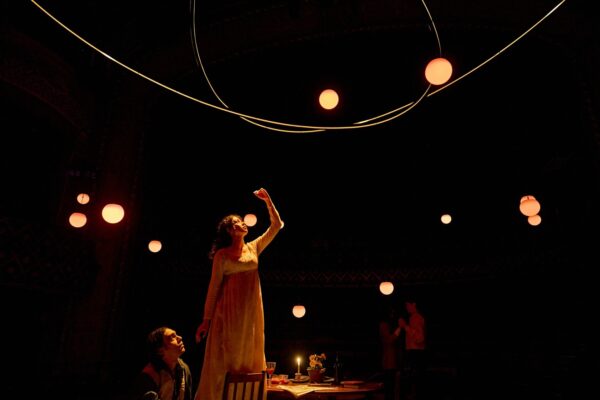
HANNAH: It’s all trivial—your grouse, my hermit, Bernard’s Byron. Comparing what we’re looking for misses the point. It’s wanting to know that makes us matter. Otherwise we’re going out the way we came in. That’s why you can’t believe in the afterlife, Valentine. Believe in the after, by all means, but not the life. Believe in God, the soul, the spirit, the infinite, believe in angels if you like, but not in the great celestial get-together for an exchange of views. If the answers are in the back of the book I can wait, but what a drag. Better to struggle on knowing that failure is final. —Tom Stoppard, Arcadia
We can accommodate ourselves to the fact of our death—but not to the thought that our lives count for nothing, that we might as well not have bothered to show up for our existence, for all the difference it makes. —Rebecca Newberger Goldstein, The Mattering Instinct
On a trip to London last month, I finally had the chance to see Tom Stoppard’s play Arcadia after more than three decades of waiting. I managed to get a ticket to one of the final performances of the production at the Old Vic (NYT review). Even at a distance with a slightly obstructed view, the play was magnificent. Stoppard’s script combines the crackling repartee of the screwball comedies of the 1930s and 1940s; the scientific excitement of complexity theory in the 1990s; and a timeless appreciation for the transience of individual lives amid the sweep of history.1 The language is beautiful. Arcadia is intellectual, poignant, and hilarious. The Old Vic’s cast and staging did the text justice. I wanted to see the play again and again. Unlike movies, alas, theatrical productions are themselves transient.2
Among the play’s themes are entropy and the irreversibility of time. Thomasina, who is 13 when we meet her in 1809, has a genius for perceiving scientific principles before the articulation we know as history. Here, she anticipates the second law of thermodynamics.
THOMASINA When you stir your rice pudding, Septimus, the spoonful of jam spreads itself round making red trails like the picture of a meteor in my astronomical atlas. But if you stir backward, the jam will not come together again. Indeed, the pudding does not notice and continues to turn pink just as before. Do you think this is odd?
SEPTIMUS No.
THOMASINA Well, I do. You cannot stir things apart.
SEPTIMUS No more you can, time must needs run backward, and since it will not, we must stir our way onward mixing as we go, disorder out of disorder into disorder until pink is complete, unchanging and unchangeable, and we are done with it for ever. This is known as free will or self-determination.
My long-awaited experience of Arcadia serendipitously coincided with my reading of Rebecca Newberger Goldstein’s latest book, which also has much to say about entropy. On the second law of thermodynamics, Goldstein writes, “I confess I’m enraptured by this law and have been ever since I was an undergraduate studying physics, suspecting that its hidden depths might shed some light on our hidden depths.”
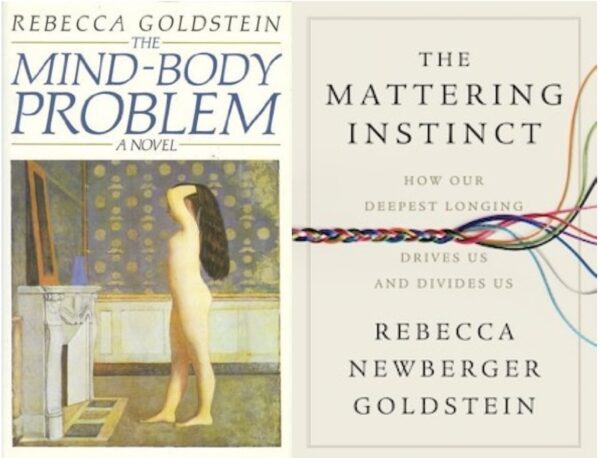
As a young philosophy Ph.D., Goldstein made a splash in 1983 with her novel The Mind-Body Problem. The story of a souring intellectual marriage, it mostly takes place among the mathematicians, physicists, and philosophers of Princeton, New Jersey. When I first read it, I was a recent, rather homesick Princeton grad and found the setting especially compelling.
On returning from England, I pulled out my old mass-market paperback (a now-obsolete format). Its pages are so yellowed that I feared they might crumble like the World War II editions of Nancy Drew I read as a child. Both the paper and the story held up.
In her novel, Goldstein introduces a mental picture she calls “the mattering map.” On rereading, the novel’s description proved more detailed and map-like and less like Saul Steinberg's famously parochial New Yorker cover than I’d remembered. It is also more judgmental.
A person’s location on it is determined by what matters to him, matters overwhelmingly, the kind of mattering that produces his perceptions of people, of himself and others: of who are the nobodies and who the somebodies, who the deprived and who the gifted, who the better-never-to-have-been-born and who the heroes….
At times I picture the separate regions as differently shaded, ranging from the palest of gray to true black, depending on how many and various are the perceptions they contain. Take the territory where what matters above all is music. It is rather pale gray. Those who live here have heroes, of course, but they lack really general standards by which to judge people. Those who worship Mozart and Bach don’t, as a rule, revile the tone-deaf. Gourmets, on the other hand, occupy a slighter deeper gray area, for they know not only whom to look up to—great cooks—but whom to look down on—consumers of frozen dinners, floury sauces, iceberg lettuce….
Then there are those regions (and we’re getting into deeper gray now) where what matters is not a person’s relationship with some external thing, such as food or clothes or music, but rather some intrinsic quality of his or her own: beauty or physical fitness. Or intelligence….Never mind that the dull can’t help themselves, that they would, granted the sense to do so, have chosen to be otherwise. Their very existence is felt as a moral affront by those of us who dwell where the genius is hero. The color of our zone is only just discernably lighter than the true black of those who perceive people according to their acceptance of some moral or religious or political code.
And so at those parties, when we sat around sharing stories of our heroes, of those now gone, like Einstein, or those still with us, like Himmel [the protagonist’s mathematician husband], we would get high on love, on love for our idols and love for each other. For in loving our great men and women we unite ourselves not only with human excellence, but also with one another. Those who share my heroes are, in the deepest sense, of my own kind.
Goldstein has continued to think about—even obsess over—mattering ever since. The result is her new, nonfiction book: The Mattering Instinct. Its premise is simultaneously obvious and novel. Humans are driven to matter. The mattering instinct is not the same as the social instinct. It is interior and existential. It leads us to question, and to seek, the meaning of our lives.
“To matter is to be deserving of attention,” she writes. All life must fight entropy to survive, but only humans wonder if they’re worth the attention required.
In us, the organic mandate of self-mattering engenders one of the most persistent forces in human motivation, which has us striving not only to survive and thrive but also striving after an existence that we deem to be meaningful in our own eyes. For us, and us alone, the organic mandate of self-mattering does not suffice. We need to convince ourselves that our own self-mattering is warranted, that we can provide a reason for it that extends beyond our being, trivially, ourselves—just as all things are, trivially, themselves. We long to demonstrate that the reason we subjectively feel that we matter is that we objectively do. This longing is what I am calling the mattering instinct, and I’ll use the two expressions—the longing to matter and the mattering instinct—interchangeably, though the latter phrase stresses its genealogy.
Given the current obsession with why Americans feel lonely, angsty, and generally down on life, The Mattering Instinct should be perfectly timed. “What we are experiencing,” writes Goldstein, “is a crisis of mattering. Individuals can experience crises of mattering—we call them, tellingly, ‘existential crises’—and so, too, can societies.”
But the critical response has been tepid.
That’s undoubtedly due, at least in part, to Goldstein’s drive to create an overarching theory drawing on such esoterica as Darwinian selection and the second law of thermodynamics. “Goldstein’s approach, unsurprisingly, is adamantly heady and philosophical,” wrote the NYTBR’s Jennifer Szlalai in a superficial joint review of two books. The statement is accurate but barbed. Be forewarned: This book is too brainy! It will hurt your head! Meanwhile, The Wall Street Journal’s review was so deranged that Goldstein, more amused than angry, wrote a response on her Substack.
The Atlantic, to its credit, enlisted philosopher John Kaag, who wrote an intelligent, appreciative review. But even he failed to emphasize what I found, especially in today’s context, the book’s most striking message: There is no single way, or single best way, to matter.
One of Goldstein’s endearing intellectual traits is her ability to recognize, explore, and honor others’ mattering projects. “I’ve been talking to people about this for over four decades, just because it fascinates me,” she said on Jonah Goldberg’s podcast. “The variety, the diversity, the true diversity of humanity—the kind of diversity that really matters—has to do with how we go about trying to satisfy this existential longing.”
She has her personal preferences—her personal sources of meaning—but she recognizes that they aren’t universal, nor does she believe they should be. She tries not to play favorites. She groups people into four categories—continents on the mattering map—based on where they find meaning in life: socializers, transcenders, competitors, and heroic strivers.3
The mother of all mattering questions—Do I matter?—is heard differently from continent to continent, a phenomenon I’ve experienced repeatedly in the decades that I’ve been discussing mattering with others. Socializers hear the mother question as: Do I matter to others? Heroic strivers hear it as: Can I achieve a standard of excellence in my chosen area? Competitors hear it as: Do I matter more than others? And transcenders hear it as: Do I matter to the spiritual presence that exists beyond, or that permeates throughout, the spatio-temporal realm?
Such pluralism is hard for people to accept. Heroic strivers see only work. Socializers see only relationship, transcenders see only religion. Competitors see only zero-sum status. The result is, to put it bluntly, public discourse that is blinkered, intolerant, and stupid. It dodges obvious questions: What if you don’t believe in God? What if your work is technologically obsolete? What if you have trouble making friends? What if mimetic theory doesn’t explain everything about human life? Instead of real insights into our personal and social dilemmas, we settle for glib Brooksian moralizing—Arthur or David, take your pick—on behalf of the One Best Way to a fulfilling life.
Goldstein, by contrast, admits her own preferences without sneaking in the suggestion that everyone should be like her. Even on the continent of strivers, she recognizes people whose pursuit of excellence is nothing like her own. They may be enraptured by beautiful fishing lures or obsessed with body building. Heroic strivers even include the pickup artist who hit on Goldstein as she was waiting for a late-arriving friend in a hotel lobby. Picking up women was his mattering project and, although he struck out with Goldstein, they had a long conversation about his art.
Goldstein acknowledges that her treatment of wildly diverse pursuits as equally meaningful will strike many as odd, and possibly repellent.
Does it seem disrespectful—even sacrilegious—to put a person who sees the meaning of their life in terms of cultivating their relationship with God on the same level, existentially speaking, with a bodybuilder or a pickup artist? But existentially speaking, they are on the same level—the mattering instinct channeled into mattering projects that, despite their high costs in energy, become essential for resisting the entropic transformation from within. Our mattering projects, ongoing for as long as they continue to minister to our mattering instinct, are what give our lives a sense of coherence, allowing our lives to make sense to us. They also give us a sense of purpose, yielding us the impetus to push on into our future.
Goldstein does attempt to turn her analysis to moral judgment that distinguishes between destructive and constructive mattering projects. “A person’s overall effect on entropy provides such an objective standard,” she writes. “A life well-lived is a life that, while pursuing mattering in a way that best accords with a person’s individuality, joins forces with life in its resistance to entropy.” Flying airplanes into the World Trade Center may make you feel like your life matters, but it’s still bad. (Where exactly the pickup artist fits in, I’m not entirely sure.)
Elsewhere she offers a version that eschews entropy for a more understandable standard closer to the Golden Rule.
Even if a mattering project is serving a person’s longing to matter reasonably well, their sense of flourishing chugging along in good order, they may nevertheless be wrong in pursuing it. Recall, for example, those intimacy socializers whose sense of mattering comes at the expense of others—love bombers, for example, or others who derive their mattering by depleting the mattering of those who have the misfortune of being in their lives, as friends or lovers, as children or parents, as neighbors or coworkers.
There’s a word for when a person’s own sense of mattering demands, as the very condition of being fulfilled, the diminished mattering of others; that word is immoral. It’s immoral whether the diminishment is focused on those with whom the diminisher is personally connected, or, as it is for zero-sum group competitors, focused on a group.
Unfortunately she immediately jumps from there to neo-Nazis, with a story about “recovering skinhead” Frank Meeink. The story is compelling but, given the book’s philosophical ambitions and all-kinds attitudes, this distinction called for more analysis of when competitors’ mattering projects are moral or neutral. Zero-sum competition is fine in arenas like sports or adversarial courtroom proceedings, but flourishing societies foster positive-sum activities. How can the competitors’ instinct to matter contribute to overall flourishing?
Grounding her moral distinction in entropy stems from Goldstein’s own mattering project: “I long to add to our knowledge of human nature and also—yes there’s an ‘also’—to follow in the footsteps of my philosophical hero, Spinoza, and ground our understanding of ethics in knowledge of human nature. That’s what it’s been about for me, and like so many others’ mattering projects, it’s brought me my share of frustration, disappointment, and misery.”
Stoppard used to say that he wrote plays because dialogue allowed him to explore ideas without picking a side. Speaking through his characters, he could contradict himself. Arcadia beautifully articulates the idea that individual lives don’t matter that much in the sweep of history, even as no one’s life lacks meaning. If one person’s creation or discovery is lost or forgotten, someone else will come along and pick it up. Nothing goes to waste.
THOMASINA But instead, the Egyptian noodle [Cleopatra] made carnal embrace with the enemy who burned the great library of Alexandria without so much as a fine for all that is overdue. Oh, Septimus!—can you bear it? All the lost plays of the Athenians! Two hundred at least by Aeschylus, Sophocles, Euripides—thousands of poems—Aristotle’s own library brought to Egypt by the noodle’s ancestors! How can we sleep for grief?
SEPTIMUS By counting our stock. Seven plays from Aeschylus, seven from Sophocles, nineteen from Euripides, my lady! You should no more grieve for the rest than for a buckle lost from your first shoe, or for your lesson book which will be lost when you are old. We shed as we pick up, like travellers who must carry everything in their arms, and what we let fall will be picked up by those behind. The procession is very long and life is very short. We die on the march. But there is nothing outside the march so nothing can be lost to it. The missing plays of Sophocles will turn up piece by piece, or be written again in another language. Ancient cures for diseases will reveal themselves once more. Mathematical discoveries glimpsed and lost to view will have their time again. You do not suppose, my lady, that if all of Archimedes had been hiding in the great library of Alexandria, we would be at a loss for a corkscrew? I have no doubt that the improved steam-driven heat-engine which puts Mr Noakes into an ecstasy that he and it and the·modern age should all coincide, was described on papyrus. Steam and brass were not invented in Glasgow. [Emphasis added.]
Yet Arcadia also makes us care about specific individuals, Thomasina above all. Her discoveries might be premature—impressive but unimportant—but the spark that is her individual self still matters. So, too, does the never-seen poet Byron. So, indeed, does Stoppard himself.
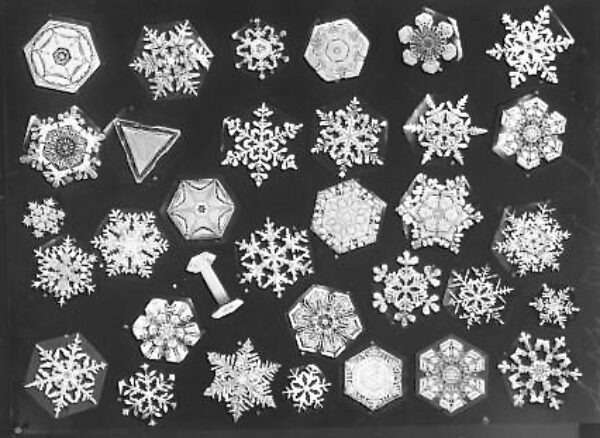
Individual variation makes the world rich and unpredictable. As the mathematician Valentine explains at the end of Act I, “The unpredictable and the predetermined unfold together to make everything the way it is. It’s how nature creates itself, on every scale, the snowflake and the snowstorm. It makes me so happy. To be at the beginning again, knowing almost nothing….It’s the best possible time to be alive, when almost everything you thought you knew is wrong.”
New work and updates
- My latest Works in Progress column explores the evolution of disposable diapers. The subhead sums it up well: “Benjamin Spock told mothers in the mid twentieth century to buy six dozen cloth diapers and a covered pail. Within a decade, both were obsolete.”
For more detail on the amazing materials and clever construction of a state-of-the-art disposable diaper, check out Bill Hammack’s video below. Commenter @holtek86: “I have been working in this industry for over 30 years so I do get to see the machines that make diapers and similar disposable products every day. When I started, 400 products per minute was considered fast and everything was driven by a lineshaft and belts. Now it’s hundreds of servo motors synchronized together with incredible precision and well over 1000 products per minute is a reality. Thanks for explaining the product so well, we do kind of take all this for granted but there is quite a bit of engineering that goes into it!”
- My previous WiP column on how early TV overcame “the vicious triangle” that almost doomed it is here. “‘Television shows were far more expensive to make than radio programs. Producers needed advertising revenue to cover the costs. But advertisers demanded large audiences. ‘We can’t get a mass audience’, [Industry executive JJ] Nance said, ‘until we have provided the American people with assured continuous entertainment, pleasing enough to stimulate the buying of receivers by the million’. Hence the vicious triangle: attracting viewers required programs, which required advertising, which required viewers…”
- While working on the diapers column I got interested in the availability of indoor plumbing and used Claude to vibe code an interactive map using Census data. Click here to get the full effect. You can discover, for instance, that when I was born in 1960 in North Carolina, more than 35 percent of the state’s households lacked full plumbing. The good old days!

- I’m thrilled to report that, as of December 31, The Fabric of Civilization has sold more than 52,000 copies in all formats (hardback, paperback, ebook, audiobook), making it by far my best-selling book.
- “Walter Mosley” is my latest fake fan. Hard to believe this works:
I recently came across your work, and I was really struck by the honesty in your storytelling and the way you blend personal experience with universal truth. As a fellow author, I deeply appreciate writing that challenges and moves readers the way yours does.
I just wanted to reach out to say how much I admired your work. It’s inspiring to see writing that’s both fearless and artful.
Warm regards
Walter Mosley
Nerdy fun
The world’s oldest working planetarium is on a Dutch living room ceiling, and of course there’s a textile connection. I would love to visit it.
1 As Reason’s editor, I assigned book reviews on the topic to my in-house expert. See here and here for a taste of the era.
2 It’s worth noting that practically even the ability to watch movies repeatedly is a relatively recent phenomenon. At the height of the studio era, movies disappeared after their runs. In the TV era, the annual showing of The Wizard of Oz was a special event. Before VCRs movies weren’t available on demand, and many classics, as well as new art films, could almost never be seen outside major cities like New York and Los Angeles.
3 The heroic is a tell for where the author’s personal allegiances lie. I would have advised her to omit the adjective.