Why Is MySpace So Ugly?
And why is such an ugly site so successful? Rob Walker asks the question, and it's a good one. Do the kids just like the clutter?
And why is such an ugly site so successful? Rob Walker asks the question, and it's a good one. Do the kids just like the clutter?
This puffy LAT piece on young celebrities' brand-building activism--"Many in Young Hollywood, especially actresses, are aligning themselves to social causes like never before"--just proves there's nothing new in Hollywood. Here's a parallel passage from Margaret Farrand Thorp's 1939 book America at the Movies.
Even further from the original base of glamour are two new qualities: culture and an interest in serious social problems. If a star in the 1920's dressed expensively to suit her type, drove a high-powered car, rode fearlessly, and swam well it was not at all necessary to assure the public that her Hollywood villa had a library or that she knew something of art and music; but just run through a fan magazine today:
"There is little of philosophy, psychology, matters political or sociological that Bob Montgomery has not read and studied. He is Duco-ed with the drawing-room manner. He might, superficially, seem to fit in with the Hemingways, the Noel Cowards, all the Bright Young People. But he can also hold his own with scientists, engineers, medical men, learned professors."...
Deanna Durbin is a pacifist. She showed a reporter her school history book with a paragraph which she had underlined with red pencil. "It was Nicholas Murray Butler's estimate that for the money spent on the World War every family in ten countries could have had a $2,500 house, $1,000 worth of furniture, several acres of land [and so on]. 'Isn't it dreadful?' said Deanna. 'Not so much the money, as the millions of people killed.'" Ten years ago such a statement would not have added to the glamour of a youthful star, but at least it is safely away from present conflicts.
That last line is quite the understated zinger. (Here is Time's 1939 review of the book.)
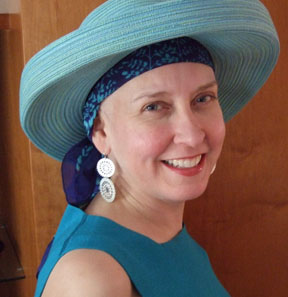 Thanks to the many readers who've sent their good wishes for my recovery from breast cancer. I've now had three rounds of chemo with three more to go, one every three weeks. (Most of my hair fell out about two weeks after the first round.) On the whole, the treatments haven't been as traumatic as I feared. Thanks to drugs to prevent nausea and boost white blood cell production, I haven't suffered the two worst side effects of chemo: nausea and immunosuppression. Mostly I've just been exhausted for the first week or so after each round.
My new Atlantic column takes on one of my favorite subjects: how to accommodate human heterogeneity. Or, if you prefer the less abstract version, why it's so hard to find jeans that fit and what businesses are doing to attack that problem. Here's the opening:
As a teenager, I squeezed into size-12 jeans. Over the past three decades, I've put on about 20 pounds, mostly below the waist. I now wear a size 6. People in the garment business call that bit of flattery "vanity sizing." Sizes aren't what they used to be.
But some things haven't changed. No matter how low the digit on the hang tag, trying on clothes is still a frustrating, even traumatic, experience. Though designed as a mere convenience, clothing sizes establish an unintended norm, an ideal from which deviations seem like flaws. There's nothing like a trip to the dressing room to convince a woman—fat, thin, or in between—that she's a freak. Her torso is too long for the jacket or too short for the dress. Her arms are too short for the blouse that fits her bust. Her seat is too flat for the pants that hug her waist. Her hips nearly split the skirt that fits her waist. The more tailored the garment, the greater the problem. (Men's clothes are easier, because they tend to be looser and because, as one industry expert puts it, men "have fewer bumps.") Jeans are particularly troublesome. With its body-hugging fit, America's egalitarian uniform provides little room to hide deviations from the norm.
And nobody's normal. Sizes are standardized. Bodies aren't.
Clothing sizes reflect a classic modern dilemma, a conflict between human heterogeneity and mass production. Standardized sizes made inexpensive, off-the-rack garments economically feasible. They gave shoppers a reliable guide to finding clothes in self-service shops. (Historically, the biggest advocates for standard sizes were mail-order catalogs, whose customers couldn't try on the clothes they were buying.) Standardized sizes seemed efficient and scientific. Clothes could be as predictable as screws or frozen peas—and as regimented and impersonal as an assembly line.
Read the whole thing here--but do it by Friday, when the free link expires. (Or subscribe and get access to the whole Atlantic archive, going back 150 years.)
Just in time for the return of pantyhose, while researching the column I learned the reason for something that has always baffled me: Humid summers aside, why do so many women hate pantyhose and why, more specifically, do they complain so much about tight waists? I've never minded wearing hose, much less found them "the bane of womanhood." But it turns out that's because I'm a physical freak. Pantyhose, even more than most women's trousers, conform to size standards that assume a big difference between waist and hip sizes. As a result, their waistbands are too tight for most women. My waist-hip ratio may be praised by evolutionary psychologists but it's hell to shop for, unless you're buying pantyhose. Better data about actual body shapes is good news for most women--and, perhaps, for slow pantyhose sales--but not for me.
In other column news, The Atlantic has let last month's column, on the great housing divide, out from behind the subscriber-only wall.
Posting will resume on Monday.
That's the subject of this paper. (Via Organizations & Markets.)
Explanation here. Read it and laugh. (Via Design Observer.)
No suprise here. (Via the surprisingly French Eugene Volokh.)
| Your Inner European is Italian! |
 You show the world what culture really is. |
Since he's gotten over his fear of vetoes, Bush's threat to veto the abyssmal Senate farm bill looks somewhat credible. Organic foodie Michael Pollan published a passionate piece against the bill in Sunday's NYT, concluding that the "politics of food have changed." If only. I can't decide whether he's disingenuously attempting to mold reality or very ingenuously mistaking his new-found interest for a new coalition. In fact, the coalition he identifies has existed at least since the late 1980s, with little to show for its efforts. I fear the SacBee's Dan Weintraub is closer to the mark:
This should be an ideal time to reform federal farm policy, if not junk it altogether. Farm incomes are forecast to be a record $87.1 billion this year, up an astounding 47 percent from a year ago and about 50 percent above the average for the past 10 years. The average farm household income is up 8 percent this year to about $87,000.
But instead of recognizing that subsidizing agriculture, if it ever made sense, no longer does, Congress is bent on continuing and even expanding the old ways. The new bill retains subsidies for corn, soybeans, cotton and rice as well as sugar price supports. Its worst feature is a projected $26 billion in direct payments that go to farmers even if prices and incomes are high — corporate welfare at its worst....
These concerns prompted the creation this year of a broad coalition of environmentalists and fresh-food advocates opposed to the status quo. They seemed to be making some headway until Congress threw a token to California's fruit, vegetable and nut industry, which had been shut out of subsidies in the past.
These specialty crop growers would get $1.6 billion over five years in the House version of the bill and $2 billion under the Senate version — a tiny piece of the total package but enough, apparently, to buy their support. The Western Growers Association, which represents California fruit, nut and vegetable growers, plans to support the bill.
Read both articles. And check out this semi-hopeful Jonathan Rauch piece from January. Ask yourself how many presidential candidates have taken on the farm lobby as they campaign across Iowa. (Even Pollan suggest that food stamps are a good idea, when cash payments that could be spent on rent, doctor visits, or school clothes would be more useful to the poor--and less fattening.) An unpopular lame-duck president, however, has nothing to lose. Maybe a veto could in fact change the usual dynamic.
I just received the newsletter from the Westwood South of Santa Monica Homeowners' Association, the neighborhood political pressure group (not the kind of contractual homeowners' association that provides joint services and governs a community). From their literature and website, the organization's implicit mandate is clear: to oppose any change in the neighborhood's configuration, especially new construction. I was particularly struck by the association's boast of opposing mixed-use projects on Westwood Blvd. and Santa Monica Blvd., both major commercial streets, because they "could result in 5-story buildings dwarfing adjacent homes."
From a crass financial perspective, blocking new construction may make sense. Restricting the supply of new housing, preferably to zero, jacks up the price of the existing housing stock--at least until the neighborhood becomes elderly, moribund, and jammed with traffic from people who have to commute from more affordable areas.