The controversy surrounding President Barack Obama's admonishment that "if you've got a business -- you didn't build that. Somebody else made that happen" has defied the usual election-year pattern.
Normally a political faux pas lasts little more than a news cycle. People hear the story, decide what they think, and quickly move on to the next brouhaha, following what the journalist Mickey Kaus calls the Feiler Faster Thesis. A gaffe that might have ruined a candidate 20 years ago is now forgotten within days.
Three weeks later, Obama's comment is still a big deal.
Although his supporters pooh-pooh the controversy, claiming the statement has been taken out of context and that he was referring only to public infrastructure, the full video isn't reassuring. Whatever the meaning of "that" was, the president on the whole was clearly trying to take business owners down a peg. He was dissing their accomplishments. As my Bloomberg View colleague Josh Barro has written, "You don't have to make over $250,000 a year to be annoyed when the president mocks people for taking credit for their achievements."
The president's sermon struck a nerve in part because it marked a sharp departure from the traditional Democratic criticism of financiers and big corporations, instead hectoring the people who own dry cleaners and nail salons, car repair shops and restaurants -- Main Street, not Wall Street. (Obama did work in a swipe at Internet businesses.) The president didn't simply argue for higher taxes as a measure of fiscal responsibility or egalitarian fairness. He went after bourgeois dignity.
"Bourgeois Dignity" is both the title of a recent book by the economic historian Deirdre N. McCloskey and, she argues, the attitude that accounts for the biggest story in economic history: the explosion of growth that took northern Europeans and eventually the world from living on about $3 a day, give or take a dollar or two (in today's buying power), to the current global average of $30 -- and much higher in developed nations. (McCloskey's touchstone is Norway's $137 a day, second only to tiny Luxembourg's.)
That change, she argues, is way too big to be explained by normal economic behavior, however rational, disciplined or efficient. Hence the book's subtitle: "Why Economics Can't Explain the Modern World."
Obama's fans have, of course, rushed to his defense, generally by arguing that the president was making a completely obvious, non-controversial point with which everyone with the slightest awareness of the world agrees. Here's a typical email I received (picked merely because it was the most recent and therefore easiest to retrieve):
the only reason you call what the President said a faux pas is because, like Fox News, you took what he said completely out of context. Tell me, Ms. Postrel, can you name one company that has managed to exist and build itself into success with just the company owner involved? One company that is successful without employees, customers and the infrastructure to support it? And by infrastructure I mean such things as roads, railroad lines and such. Can you name such a company? Because Mitt Romney has been trying to for the last several weeks now since the President made those remarks and Mr. Romney has been failing pathetically at it.
Because that is what the President was talking about..that a company relies on people and things besides just it's owner to succeed. What the President said only is a faux pas if one takes him completely out of context and is so incredibly intellectually dishonest that one sits there like you and Fox News and all the conservatives and pretends that companies are an island onto themselves where the only person that made it successful is the company owner.
If that's all the president meant, then why did he make a point of saying it? Who on earth did he think he was arguing with? The many entrepreneurs who think they don't need customers, employees, and roads? I'm pretty sure that even Rupert Murdoch would not question that claim.
Immediate electoral issues aside, this rush to say that the president was just repeating truisms and not actually trying to run down entrepreneurs is gratifying. It suggests that bourgeois dignity is alive and well, making attacks on it unthinkable.
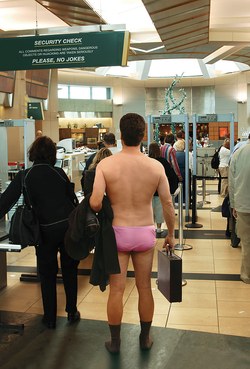
The front page of today's NYT carries this investigative piece about racial profiling by TSA officers at Boston's Logan Airport. Since two of the 9/11 flights originated there, you might think local officers were just jumpy about terrorism. But no. They're allegedly targeting blacks and Hispanics, especially those bound for Miami, because of pressures to find people who can be arrested for reasons having nothing to do with terrorism or any other violent threat to the safety of air travel. From the story by Michael S. Schmidt and Eric Lichtblau, which you should read in full:
At a meeting last month with T.S.A. officials, officers at Logan provided written complaints about profiling from 32 officers, some of whom wrote anonymously. Officers said managers' demands for high numbers of stops, searches and criminal referrals had led co-workers to target minoritiesin the belief that those stops were more likely to yield drugs, outstanding arrest warrants or immigration problems.
The practice has become so prevalent, some officers said, that Massachusetts State Police officials have asked why minority members appear to make up an overwhelming number of the cases that the airport refers to them.
"The behavior detection program is no longer a behavior-based program, but it is a racial profiling program," one officer wrote in an anonymous complaint obtained by The Times.
The TSA has no business looking for drugs, outstanding arrest warrants, or immigration problems unless it has serious reason to believe that the person involved poses a serious threat to air safety. If it is going to serve as an extension of every other sort of law enforcement, then its searches should be subject to the same requirements for probable cause, which would allow almost everyone to travel without submitting to TSA examination.
This mission creep recalls InstaPundit's prescient post at 1:49 p.m. on September 11, 2001:
It's Not Just Terrorists Who Take Advantage: Someone will propose new "Antiterrorism" legislation. It will be full of things off of bureaucrats' wish lists. They will be things that wouldn't have prevented these attacks even if they had been in place yesterday. Many of them will be civil-liberties disasters. Some of them will actually promote the kind of ill-feeling that breeds terrorism. That's what happened in 1996. Let's not let it happen again.
And that's exactly what happened.
(The headline is not technically accurate, since the TSA does not arrest people. It refers them to other law enforcement agencies.)
Levy Izhak Rosenbaum of Brooklynhas been sentenced to two and a half years in prison for illegally brokering sales of kidneys. He will also forfeit $420,000 in profit. It's the first case ever brought under the 1984 act outlawing the exchange of "valuable consideration" for organs.
Rosenbaum, who was caught in a sting as part of a broader corruption probe, may be the generous life-saver his supporters maintain. He may be the venial money-grubber portrayed by prosecutors. Or, like the donors who took money for their kidneys, he may be something in between.
But one thing's for sure: While it lasted, his organ business was highly profitable -- a textbook example of how prohibition produces extraordinary margins for people willing to buck the law.
In one case, a family paid Rosenbaum $150,000 for a kidney from a man who got only $25,000 for his organ. That $125,000 profit represents a lot more than a finder's fee. It's a reward for breaking the law -- for bearing the risk of going to prison and knowing how to circumvent the system. Those figures also establish upper and lower bounds for the market-clearing price of kidneys, not in some impoverished country with desperate people and questionable medical procedures but in state-of-the-art U.S. transplant centers.
Since there isn't a market for kidneys, people who don't have compatible family or friends have to go out and beg strangers for help. Back in 2007, I wrote about Karol Franks's successful networking to find her daughter Jenna a kidney. Now Jenna's donated kidney is failing, and, at age 26, she's facing a return to dialysis. Karol has set up a Facebook page to try to find another Type O donor for Jenna.
Posted by Virginia Postrel on July 16, 2012 • Comments
Thanks to everybody who answered my shoe survey. It plays a small role in my latest Bloomberg View column. Here's the column lead:
If you have been reading newspapers or websites, listening to the radio or watching TV over the past few weeks, you have probably heard the news: "You CAN judge a person by his shoes." Beginning in mid-June, word of a psychology article titled "Shoes as a source of first impressions" began circling the globe.
Describing an experiment by researchers from the University of Kansas and Wellesley College, many reports declared that shoes alone reveal just everything about the wearer's personality. "Overly aggressive people wear ankle boots," proclaimed a Los Angeles National Public Radio host.
What psychologist Omri Gillath and his team actually found was more modest. Without the cues of facial expressions and context, college students could guess basic demographic characteristics from looking at photos of other college students' footwear: gender, age and income. They could also detect the personality trait known as agreeableness, as well as something called attachment anxiety, which is connected to fear of rejection and was correlated with dull-colored shoes. That was all: not political affiliation, not how extroverted the wearers were, not whether they were overly aggressive.
The study made a solid contribution to research on first impressions, but it was hardly earthshaking. By getting so much attention, however, it demonstrated a sociological truth: People love to talk about shoes. Even those who dismissed the research as silly often felt compelled to call radio stations or comment on websites, providing details about their own choices. Why this fascination with footwear?
Like cars, shoes combine function and aesthetics, the promise of mobility and the pleasures of style. As apparel, they offer not only protection but transformation; as autonomous objects, they serve as "bursts of beauty that defy the mundane," writes Rachelle Bergstein in Women from the Ankle Down: The Story of Shoes and How They Define Us. Unlike cars, shoes are also inexpensive enough to permit people to build diverse wardrobes, changing footwear with season, circumstances and mood.
Whether Jimmy Choos, Pumas or Toms, shoes let us stand out as individuals while fitting into similarly shod social groups. The complex relationship between the social and the personal is why it's so hard to tell much about a shoe's owner from a photograph alone -- and why shoes are so interesting. Their meanings require, and sometimes reveal, broader cultural context. Bergstein tells the story of a Texas high school that in 1993 punished students for wearing Doc Martens, falsely assuming that the boots signaled white racism when in fact they merely reflected students' musical taste. A shoe, says Elizabeth Semmelhack, the senior curator at the Bata Shoe Museum in Toronto, "is an accessory that can carry a lot of cultural meaning."
The Free Press has accepted my book, tentatively titled Glamour Decoded, and sent me the traditional "Author Questionnaire" to provide information for the publicity and marketing departments. (They're not blunt enough to say it, but essentially for the people who won't read any of the book.) Although the questionnaire came as a .docx file and has a section asking about online activities, the initial instructions recall an earlier era (emphasis added):
The purpose of this questionnaire is to provide our publicity, promotion, and advertising departments with accurate information about you and your work. If you would answer each question as thoroughly as possible, it will enable us to answer questions from the press and the public quickly and accurately, and to obtain the best possible attention to your book. We will keep this information on file to be used in the preparation of news releases to the media. Please type your responses if possible. If you would like any of this information to be kept confidential, indicate so by placing a check in left margin of the question and we will respect your wishes. If you need more space, feel free to attach additional pages, indicating which question or section they correspond to.
They even spaced twice between sentences, just as I was taught to do in middle-school typing class. All that's lacking is a reference to carriage returns.
Posted by Virginia Postrel on July 08, 2012 • Comments
Times are tough in the magazine business and every penny counts. So I was surprised to receive not one but two copies of the latest issue of Time--a redundancy that was beaten when Sports Illustrated arrived, with three identical copies. Unless word has come down that Time Inc. is going to single-handedly cover the USPS deficit, something has gone seriously wrong in the printing and fulfillment departments. Or maybe the Postrels are just lucky.
Posted by Virginia Postrel on July 08, 2012 • Comments
I am looking for someone to help me overhaul and update the non-blog portions of this site. If you're interested, please email me at vp-at-dynamist.com.
Posted by Virginia Postrel on July 03, 2012 • Comments
One of the great miracles of industrial technology is the transformation of one of the most difficult of household tasks, washing clothes, into one of the easiest. (I'm doing it right now.) Although he doesn't note it in the talk, hand-washing clothes is so onerous that it is one of the first chores people who don't have washing machines contract out to even poorer people. (Some of the commenters, none of whom scrub their jeans by hand, thus see washing machines as destroying jobs.)
But if you don't want to use electricity, there's a new alternative to the old washboard and bucket called The Laundry POD. (h/t Greg Rehmke via Facebook.)
Posted by Virginia Postrel on July 02, 2012 • Comments
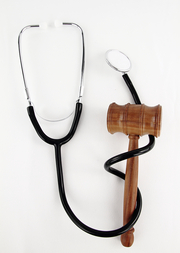
Larry Solum's article is the best I've seen for putting the decision in a broader legal context.
DrRich on Covert Rationing called the "it's a tax" angle more than two years ago. Greg Mankiw suggested that taxes and mandates were economically identical back in 2007, when Obama opposed a mandate and Hillary supported one. He also links to a discussion of Bush's plan.
Megan McArdle, who recently returned to blogging and is now at the Daily Beast, has some sensible reactions--and links to some 2010 predictions about the effects of the bill. Be sure to read the predictions.
The Volokh Conspiracy has so much stuff that yesterday their server seemed to be having problems.
Please help me with an experiment. First estimate how many pairs of shoes you own. Then go count them. Post the two numbers in the comments below.
Here's a WSJ column I wrote on a related subject, although it doesn't mention shoes. Excerpt:
Take clothes. In 2008, Americans owned an average of 92 items of clothing, not counting underwear, bras and pajamas, according to Cotton Inc.'s Lifestyle Monitor survey, which includes consumers, age 13 to 70. The typical wardrobe contained, among other garments, 16 T-shirts, 12 casual shirts, seven dress shirts, seven pairs of jeans, five pairs of casual slacks, four pairs of dress pants, and two suits—a clothing cornucopia.
Then the economy crashed. Consumers drew down their inventories instead of replacing clothes that wore out or no longer fit. In the 2009 survey, the average wardrobe had shrunk—to a still-abundant 88 items. We may not be shopping like we used to, but we aren't exactly going threadbare. Bad news for customer-hungry retailers, and perhaps for economic recovery, is good news for our standard of living.
By contrast, consider a middle-class worker's wardrobe during the Great Depression. Instead of roughly 90 items, it contained fewer than 15. For the typical white-collar clerk in the San Francisco Bay Area, those garments included three suits, eight shirts (of all types), and one extra pair of pants. A unionized streetcar operator would own a uniform, a suit, six shirts, an extra pair of pants, and a set of overalls. Their wives and children had similarly spare wardrobes. Based on how rarely items were replaced, a 1933 study concluded that this "clothing must have been worn until it was fairly shabby." Cutting a wardrobe like that by four items—from six shirts to two, for instance—would cause real pain. And these were middle-class wage earners with fairly secure jobs.
So how many pairs of shoes do you think you own? How many do you actually own?
Posted by Virginia Postrel on June 21, 2012 • Comments


 The front page of today's NYT carries this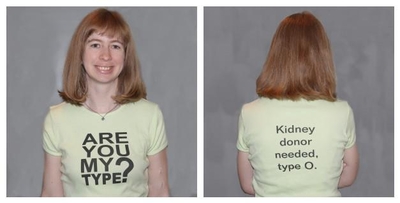
 . Unlike cars, shoes are also inexpensive enough to permit people to build diverse wardrobes, changing footwear with season, circumstances and mood.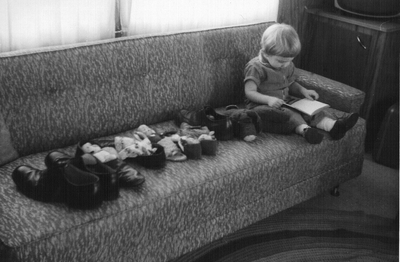
 Larry Solum's article