Everyday Abundance: Our history podcast is live!
This post went out to subscribers to my Substack newsletter on June 10, 2026. Check out all the posts, including ones from the archives not reposted here, and subscribe here.
Last October, fellow author Charles C. Mann (1491, The Wizard and the Prophet) and I teamed up at the Progress Conference. I interviewed him about his series of articles, “How the System Works,” which examined “the hidden mechanisms that support modern life — and what happens if we don’t maintain them.” You can see a video of that session here:
While we were preparing for the conference, an idea emerged. The two of us should do a podcast exploring the hidden histories behind everyday activities—all the innovations we take for granted as we brush our teeth, get dressed, shop for groceries, cook our meals, etc. My working title was “Making Progress: The Hidden History of Everyday Activities.”
So when I attended the Abundance Conference in DC in September, I told everyone I met that we wanted to do this podcast and were looking for a sponsor. Berin Szóka introduced me to Dan Sacks from the Abundance Institute, and Abundance agreed to fund it. They’re a small, nimble organization based largely in Utah—so nimble that by the time we took the stage in Berkeley in mid-October, our podcast was a go! They’ve continued to be a pleasure to work with. Menschen one and all.
The first three episodes of what is now called “Everyday Abundance” are now available as audio through the Abundance website or your favorite podcast provider, as well as on YouTube. You can find all the relevant links here. Support the Abundance Institute with a monthly donation and you’ll get early releases, swag, and other perks. You’ll also make it more likely that we can add a second season to the eight episodes we’ve done so far. (Larger contributions are especially welcome!)
So why do this? It was fun but also a lot of work.
One reason is related to the motivation for the “How the System Works” articles, The Fabric of Civilization, and many of my Works in Progress articles (see: disposable diapers). We want people to better appreciate the wonders around them and the intelligence and efforts that created the things we take for granted. As I wrote in The Future and Its Enemies (links added):
Once embodied in a cake or a bread machine, the baker’s knowledge can be widely distributed, enjoyed by people who could not duplicate his mastery with their own hands. The same is true of Bogyos’s piano diagrams (or the piano itself), Pixar’s digitally animated movies, and Noonan’s speeches. Articulation is hard, scarce, and well rewarded. But once the knowledge has a home—tangible or intangible—that can be duplicated, then it can spread easily.
“The hallmark of modern consciousness is that it recognizes no element of mind in the so-called inert objects that surround us,” writes Morris Berman in The Reenchantment of the World. In the sense that he means it, Berman is quite correct; modernity is anti-animistic. But we do in fact live in an enchanted world, surrounded by objects brimming with intelligence—the objects of our own making, objects whose “element of mind” is so great no single person can possess it all. The wonder of the bread machine and the piano is that they contain so much knowledge, available even to the ignorant. They are the exotic fruits of our vast tree.
In “Everyday Abundance,” we’re also implicitly showing why progress isn’t a question of marching toward a known goal. It’s a complicated process of innovations, new problems, new innovations, etc. Progress runs on discontent. As Henry Petroski wrote, “the future perfect can only be a tense, not a thing.”
Finally, there’s just the intrinsic fascination of finding out where things came from, who invented them, and what life was like both long, long ago and surprisingly recently. The two of us love history, and we want to understand what the past was really like.
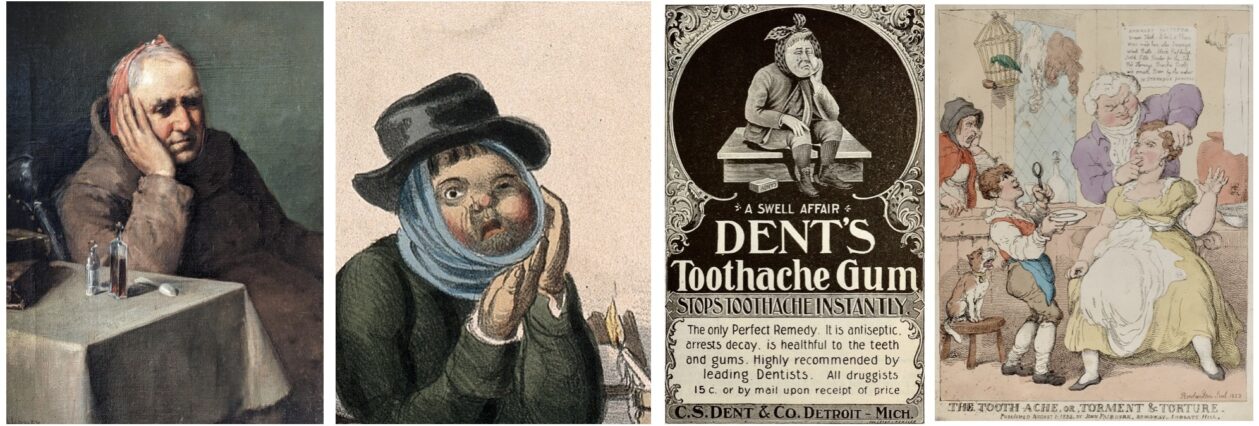
An interesting side effects of having two Boomers do a history podcast is that our own memories go back a half century and our familial memories a century. We found ourselves explaining things like telephones fixed in a single place and cashiers who had to count out change. Along with research from books and experts, you’ll hear stories from our own pasts and those of family members. As a little girl in the 1940s, for instance, my poor mother got her teeth filled without anesthesia!!!!!!
Get your grandparents to tell you stories about their early days. I wish I’d asked my grandmother about growing up in her mother’s boarding house. The only thing I remember her saying about her childhood is that her mother always made her take her little sister with her.
Please check out the podcast page, subscribe to our YouTube channel, and leave comments! Let us know what you think and what topics you might want to see in the future.